Business · · 6 min read
Designing Health Screening Packages That Sell: A Clinic Playbook
Updated August 12, 2026 · by the WellnessEquip Indonesia supply desk
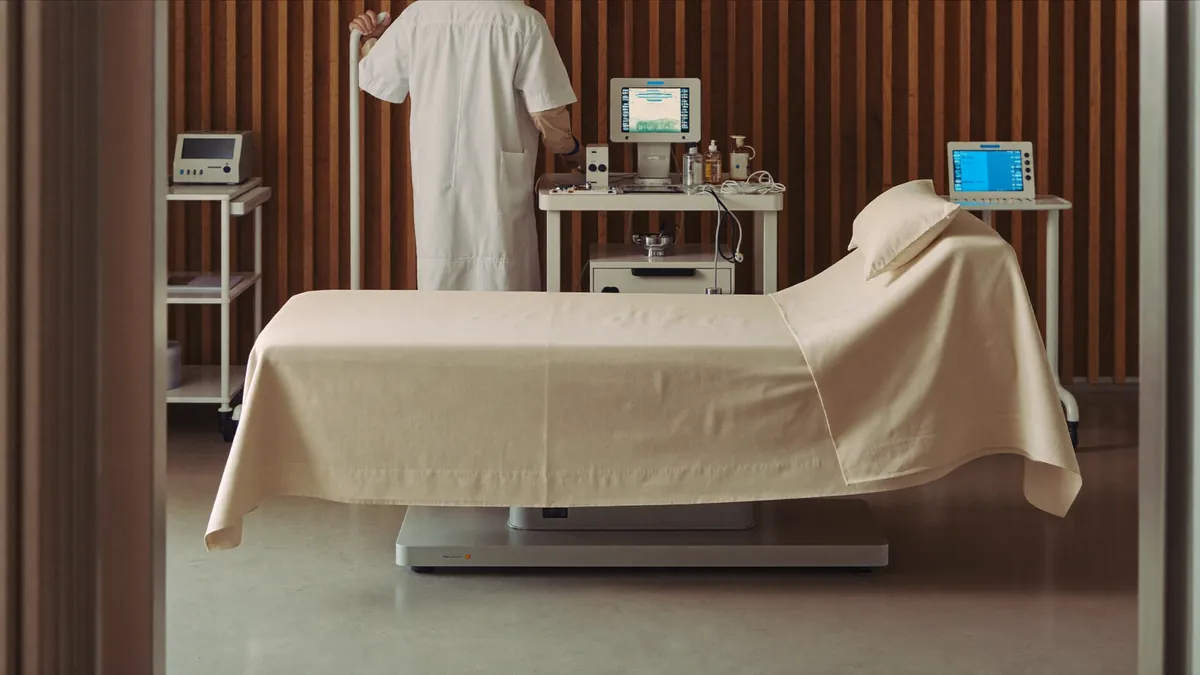
A hospital director in Surabaya asked us last year to spec a screening floor with one instruction: “Make it good enough that our patients stop flying to Penang.” That sentence is the whole market. Government and industry estimates put Indonesian outbound medical spending at $1.5–2 billion a year across roughly two million patients, and the entry product for most of them is not surgery — it is the annual executive check-up. Over the past three years our supply desk has equipped screening operations from Jakarta's SCBD towers to clinics in Denpasar and Medan, and this article condenses what we have learned into a buildable playbook: package architecture, the equipment behind each station, throughput math, and where the margin actually lives.
Why check-up revenue is leaving, and why it can be kept
Patients do not fly to Singapore for better blood tubes. They fly for three fixable things: same-day results, a clean guided flow instead of hospital queues, and a report that a busy executive can actually read. Every one of those is an equipment and process decision, not a medical superiority issue. Point-of-care analyzers now return laboratory-grade chemistry in minutes, and a well-designed five-station circuit moves a client from vitals to physician debrief in 90 minutes. A clinic in Menteng that delivers that experience at $350 is competing head-on with a $1,200 Singapore package — and winning on convenience.
Package architecture: four tiers that sell
Tiering is not decoration; it is how you capture both the price-sensitive employee screen and the CEO's longevity budget with one floor and one team.
| Tier | Typical contents | Duration | Price range |
|---|---|---|---|
| Essential | Vitals, BMI and body composition, HbA1c, lipid panel, basic chemistry, physician summary | 45 min | $85–120 (Rp 1.4–2 juta) |
| Executive | Essential + full chemistry, arterial stiffness, HRV and stress screen, ECG, same-day consult | 90 min | $250–400 |
| Premium | Executive + resting metabolic rate, VO2 estimate, advanced cardiovascular mapping, body scan | 2.5 h | $500–800 |
| Longevity / CEO | Premium + biological age, oxidative stress, cognitive baseline, annual membership with re-tests | 3–4 h | $900–1,500 |
Two design rules we enforce with every client. First, every tier must finish with a human physician debrief — it is the single highest-rated element in post-visit surveys. Second, the gap between tiers should be visible hardware, not just more blood tubes: the client should physically experience what the next tier buys.
Mapping equipment to stations
A screening floor is a production line, and each station needs a device that is fast, operator-friendly and impressive to sit in front of. The core map we install:
- Station 1 — Vitals: an Omron HBP-8000 vitals station (~$6,900) handles blood pressure, and pairs with height/weight in under five minutes.
- Station 2 — Body composition: an InBody 970 body composition analyzer gives segmental muscle, visceral fat and fluid balance in 90 seconds — the printout clients photograph and keep.
- Station 3 — Blood: a Piccolo Xpress chemistry analyzer (~$30,000) returns a 14-panel chemistry from a finger of whole blood in about 12 minutes, and an Afinion 2 analyzer adds HbA1c and lipids in roughly 3–8 minutes per cartridge. This pair is what makes “results before you leave” true.
- Station 4 — Cardiovascular: a Max Pulse HRV device screens autonomic stress in three minutes, while a VaSera VS-2000 measures arterial age (CAVI) — the number that converts executives into follow-up patients.
- Station 5 — Metabolic (Premium and up): a KORR CardioCoach or PNOE cart for resting metabolic rate and VO2.
The full station menu with specifications lives in our point-of-care testing category. Station prices here are indicative landed figures — the final number for each order is confirmed by a supply manager, since it moves with the exchange rate, the freight method and the delivery route. Every unit we deliver in Indonesia carries AKL registration — non-negotiable for licensed clinics, as we explained in our longevity clinic opening guide.
Throughput and revenue math
Screening economics are a throughput game: five stations on staggered 15-minute slots comfortably process 12–18 mixed-tier clients a day with one physician and four operators. Here is the conservative model we hand to clinic owners, at month-six volumes:
| Line | Assumption | Monthly |
|---|---|---|
| Essential packages | 6/day × $100 × 24 days | $14,400 |
| Executive packages | 4/day × $320 × 24 days | $30,720 |
| Premium and Longevity | 1.5/day × $700 × 24 days | $25,200 |
| Gross revenue | $70,320 | |
| Staff, consumables and cartridges, rent, marketing | −$41,000 | |
| Operating contribution | $29,320 |
The station equipment behind this — roughly $205,000–235,000 (Rp 3.3–3.75 miliar) depending on the metabolic option — pays back in 7–9 months once volumes mature, and cartridge consumables run 12–18% of blood-tier revenue, which the table already absorbs. Ramp honestly: months one to three usually run at half these volumes while corporate contracts close.
Talk to a supply manager on WhatsApp — send your floor plan and target tiers and we will return a station-by-station equipment map with per-test consumable costs.
The corporate channel is half the volume
Indonesian labor practice makes annual medical check-ups (MCU) standard for formal-sector employers, and HR departments buy them in blocks of hundreds. A single corporate agreement at $25–60 per employee fills your Essential tier on weekdays and smooths seasonality; three of them justify a second blood station. Price the corporate tier lean, then let 10–20% of screened employees upgrade privately to Executive — that upgrade behavior, which we consistently see in Jakarta and Surabaya installs, is where the channel's real margin hides. We wrote a dedicated playbook on winning these contracts in our corporate wellness Indonesia guide.
A second channel hides in plain sight: Bali. Expats and long-stay visitors in Sanur, Canggu and Seminyak still fly to Bangkok or Singapore for annual check-ups because nobody has packaged a credible local alternative, and clinics we supply in Denpasar report executive-tier uptake from foreigners at prices 15–20% above the Jakarta rate card. Meanwhile Medan and Batam sit one ferry ride from the very Malaysian and Singaporean hospitals absorbing Indonesian outbound spend — a well-equipped screening floor in either city intercepts patients before they leave the country, on clinical real estate far cheaper than Jakarta's, which materially shortens payback.
Reports, retention and the second visit
The report is the product the client shows their spouse. Make it visual — arterial age on a dial, body composition trends over years, a one-page action list — and deliver it same-day as a PDF plus a printed folder for the Longevity tier. Then engineer the return: a flagged risk should book its follow-up consult before the client leaves, and every package should quote next year's re-screen at a member price. Clinics that track it tell us 30–40% of screened clients generate follow-up revenue within 90 days; without a deliberate re-booking step the number collapses to single digits. The broader demand picture — why preventive screening is compounding across Asia — is covered in our preventive health check-up market analysis.
Five mistakes we see in screening package design
- Copying a hospital MCU menu. You cannot out-hospital a hospital; win on flow, design and same-day results instead.
- Bottleneck blindness. One slow station (usually blood) caps the whole floor; buy analyzer capacity to match your fastest station, not your average.
- Pricing only in USD. Domestic executives in Jakarta, Surabaya and Medan are the volume; quote Rupiah first for corporate deals.
- No female-focused package. Screening buyers skew female in our clients' data; a tier addressing hormonal and bone health outsells a generic one.
- Buying devices without AKL. It stalls licensing and voids the corporate channel, where procurement departments audit paperwork.
Build the floor once, sell it for years
A screening floor is one of the few clinic investments where demand already exists and currently flies abroad. Design four honest tiers, buy fast point-of-care hardware, wire in the corporate channel, and the model above becomes a spreadsheet you can defend to any investor. Message our supply desk on WhatsApp for a costed proposal — we deliver and commission across Jakarta, Bali and Surabaya, door to door, with training included.
The WellnessEquip Indonesia supply desk sources, imports and installs wellness equipment across Indonesia. Questions about your project? Message a supply manager on WhatsApp — honest answers, no hard sell.
— FAQ
Frequently asked questions
What should a health screening package include?
A sellable package tiers from Essential (vitals, body composition, HbA1c, lipids, physician summary at $85–120) up to Executive and Longevity tiers that add arterial stiffness, HRV, metabolic testing and biological age at $250–1,500. Every tier should end with a physician debrief and same-day results.
What equipment does a screening clinic need for same-day results?
Point-of-care analyzers are the key: a Piccolo Xpress returns a 14-panel chemistry in about 12 minutes and an Afinion 2 delivers HbA1c and lipids in 3–8 minutes, alongside an InBody 970, an Omron vitals station and a Max Pulse for cardiovascular screening.
How profitable are health screening packages in Indonesia?
At mature volumes of 12–18 clients a day across mixed tiers, our model shows roughly $70,000 monthly gross revenue and about $29,000 operating contribution, paying back a $205,000–235,000 equipment investment in 7–9 months. Corporate MCU contracts are what stabilize the volume.
How do clinics win corporate health screening contracts?
Price an Essential corporate tier at $25–60 per employee, prove throughput with a pilot day at the employer's office, and provide anonymized cohort dashboards for HR. Expect 10–20% of screened employees to privately upgrade to higher tiers, which is where the margin concentrates.
— Keep reading
Related guides
Business · 6 min read
Corporate Wellness in Indonesia: Programs Companies Actually Pay For
Medical premiums in Indonesia are inflating 10–13% a year and HR budgets are responding. Four corporate wellness program models, the equipment behind them, and screening-day economics for providers.
Trends · 6 min read
Preventive Health Checkup Market: Asia's Boom, Indonesia Next
Asia's preventive health checkup market is heading past $100 billion, and Indonesia is its most under-served corner. The market numbers, the equipment stack of a modern screening centre, and package pricing that works in 2026.
Business · 6 min read
How to Open a Longevity Clinic in Bali: Licenses, Budget, Equipment
Legal structure, clinic licensing, AKL device registration, three equipment budget tiers and honest payback math — everything we tell founders who want to open a longevity clinic in Bali.