Recovery · · 7 min read
Cold Plunge vs Ice Bath: An Operator's Honest Comparison
Updated August 12, 2026 · by the WellnessEquip Indonesia supply desk
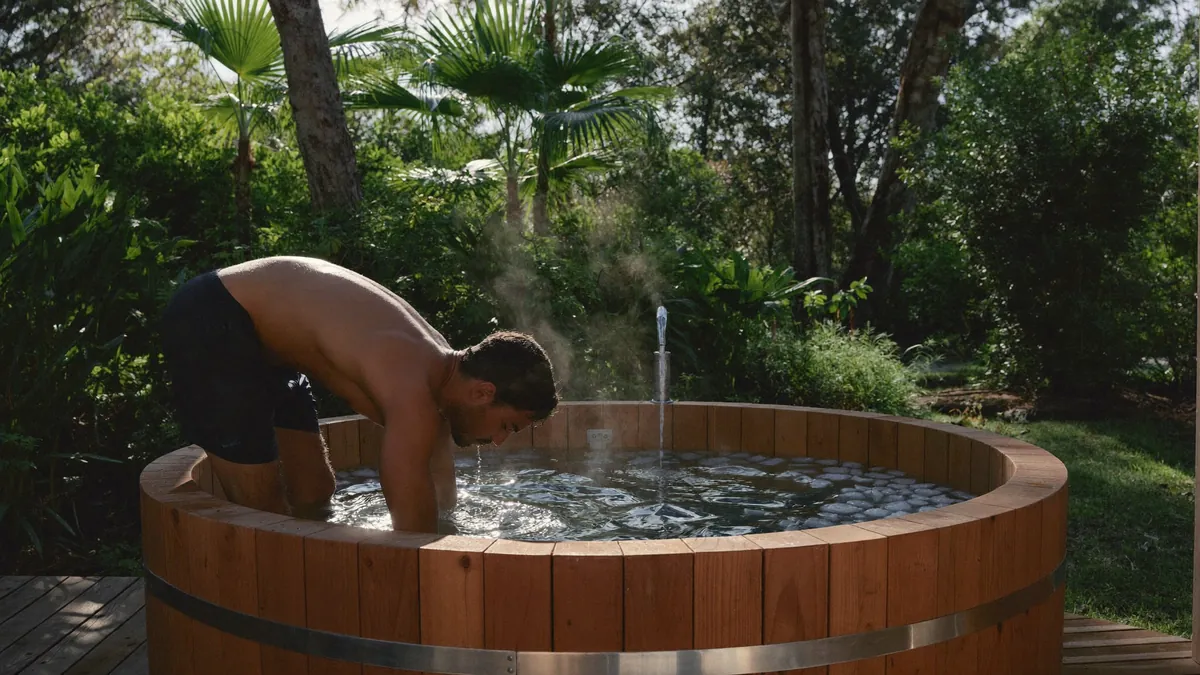
At least once a week someone messages our supply desk with a variation of the same question — a villa manager in Sanur, a gym owner in Canggu, a spa director in Jakarta: “should I buy a cold plunge or just do ice baths?” The two terms get used interchangeably on Instagram, but from an operator's chair they are different machines with different cost curves, and choosing wrong is a five-figure mistake over two years. Having supplied both formats to recovery businesses across 100+ equipment projects in Indonesia, here is the comparison we walk clients through — with the actual numbers.
Definitions first, because the internet blurs them
An ice bath is the literal thing: a tub of water you cool by adding ice. No refrigeration, no plumbing, minimal capital. Temperature starts wherever the ice takes it — often 2–5°C right after loading — and climbs steadily as the ice melts and bodies cycle through.
A cold plunge is an engineered system: an insulated tub with a refrigeration chiller, a circulation pump, mechanical filtration and usually ozone or UV disinfection. You set 6°C on the controller and it holds 6°C at 7 am and 7 pm, guest after guest.
Same ritual for the user. Completely different operation behind the curtain.
The physiology does not care which you choose
The adaptations that clients pay for are triggered by cold water, not by the machine that made it cold. A frequently cited study in the European Journal of Applied Physiology measured a roughly 530% rise in plasma noradrenaline after immersion at 14°C — and that response, along with the alertness and mood effects clients describe, shows up whether the water was chilled by a compressor or a bag of ice. Practical protocol ranges we see across Indonesian studios: 10–15°C for 3–5 minutes for beginners, 4–8°C for 2–4 minutes for experienced users. Below about 3°C, risk climbs faster than benefit, and supervision becomes non-negotiable. In other words: buy on economics and operations, not on claims that one format is biologically superior.
The real comparison table
| Factor | Ice bath (manual ice) | Cold plunge (chiller system) |
|---|---|---|
| Capital cost | $300–1,500 (Rp 5–24 million) | $4,500–12,000 (Rp 72–190 million) |
| Cost per cold session | Rp 150,000–300,000 in ice at commercial volume | Rp 15,000–25,000 in electricity |
| Temperature stability | Drifts upward all day; first guest gets 4°C, tenth gets 12°C | Holds setpoint ±0.5°C all day |
| Hygiene | Standing water; must drain daily or risk bacterial growth | Continuous filtration + ozone/UV; drain every 50–70 bathers |
| Daily throughput | Realistically 5–10 sessions before water quality and temperature fail | 25–40 sessions with stable quality |
| Staff time | High: ice runs, loading, draining, scrubbing | Low: monitoring, scheduled cleaning |
| Best for | Events, pop-ups, demand testing, home use | Daily commercial operation |
Ice logistics in Indonesia: the hidden operating cost
Here is the part first-time operators underestimate. In 31°C ambient, a 500-liter tub needs roughly 60–100 kg of ice per operating day to reach and hold single-digit temperatures through even a modest session schedule. Block ice from Denpasar suppliers runs Rp 1,000–1,600 per kg delivered — so a busy weekend day costs Rp 100,000–160,000 in ice alone, and a commercial month lands at Rp 2–4 million ($125–250). Then the operational friction: deliveries that miss the morning slot, coolers of melting stock during ceremony road closures in Bali, no supplier coverage on Nyepi week, and thin availability the moment you leave the city — clients in Lombok and rural Ubud consistently report ice as their least reliable input. None of this shows up in the Instagram version of the business.
The crossover math: when the chiller pays for itself
Take a mid-range commercial plunge at $6,500 (Rp 104 million) against an ice-bath operation spending Rp 3 million a month on ice plus roughly 1.5 hours of staff time a day on ice runs and resets — call it another Rp 1.5–2 million a month at Indonesian wages. That is Rp 4.5–5 million ($280–310) a month in avoidable operating cost, before counting sessions you could not sell because the water was too warm by mid-afternoon. The chiller system covers its price difference in 18–24 months on operating costs alone; add the extra sellable throughput — 25+ stable sessions a day versus 5–10 — and serious operators cross over in under a year. Our rule of thumb: if you will run more than 8–10 paid sessions a week, every week, buy the plunge. If you are testing demand, running monthly events or serving one villa household, start with ice and keep your capital.
Not sure which side you are on? Message a supply manager on WhatsApp — send your expected session volume and location, and we will run the crossover math for your case, free.
If you buy a cold plunge: the spec checklist for the tropics
- Chiller sizing. One horsepower per 400–500 liters to hold 4–8°C in Indonesian ambient. The 0.3 HP units all over the marketplaces were specified for temperate garages — in Bali heat they run flat-out and still lose the afternoon.
- Insulation. A well-insulated tub with a cover cuts chiller runtime by 30–40%. Ask for the insulation spec, not just the render.
- Filtration and disinfection. 20-micron mechanical filtration on a continuous loop plus ozone or UV. Cold slows bacteria; it does not sterilize anything.
- Electrical safety. RCD/GFCI protection and IP-rated connections, installed by a licensed electrician. Non-negotiable around water.
- Serviceability. Ask who stocks compressor parts in Indonesia and what the service SLA is. A plunge that waits six weeks for a part from overseas is an expensive planter box.
Or skip the spec sheet entirely: the branded systems we now stock — the Plunge All-In (~$23,000) and Plunge Evolve XL (~$21,000) — arrive with every box above ticked from the factory. Against the $4,500–12,000 a generic chiller build costs, that is a real premium; what it buys is integrated refrigeration, documented filtration, warranty and commissioning instead of a parts list you assemble and then own the risk of.
If you run ice baths: do them properly
- Establish two ice suppliers before you publish a schedule, and confirm holiday coverage in writing.
- Drain and scrub daily — standing water in tropical heat becomes a microbiology experiment overnight.
- Use an insulated tub and a cover between sessions; your ice budget will drop by a third. A purpose-built insulated pod like the Lumi recovery pod (from ~$400) does this out of the box.
- Post water temperature visibly and keep sessions supervised; drifting temperature changes safe immersion times.
The villa and rental market: a special case
Villa owners and rental managers in Uluwatu, Ubud and Lombok ask the same question with different math, and here the answer flips from what intuition suggests. For a private or rental villa, the manual ice bath is usually the wrong choice despite the lower sticker price — because nobody on a villa staff reliably owns the 6 am ice run, and a guest who booked partly for the advertised plunge will mention lukewarm water in the review that costs you the next booking. Rental managers we supply report that a genuine, working cold plunge and sauna combination supports a 10–20% nightly-rate premium on wellness-positioned listings, which on a $350-a-night Uluwatu villa recovers a compact $4,500–6,500 plunge — or a branded Ice Barrel 500 at ~$4,100 — inside a season. The right villa spec is smaller but stricter: a 1 HP tropical-rated chiller, a lockable insulated cover, ozone on a timer, and a monthly maintenance visit — set-and-forget reliability matters more than capacity when there is no attendant on site.
What the strongest operators do next
Whichever format you start with, the upgrade path is the same: make cold measurable. Studios in Seminyak and Canggu that pair immersion with recovery data — resting heart rate and HRV trends tracked through Firstbeat Life HRV monitoring, plus periodic circulation screening on a Max Pulse HRV and vascular screening device — convert casual plungers into 12-month members, because progress you can see renews itself. The broader screening stack lives in our cardiovascular health equipment category. And if the plunge is step one of a bigger build, read our ice bath business guide for the full financial model and our contrast therapy spa guide for pairing cold with heat — the combination outsells either alone in every project we have supplied.
The verdict
Ice baths are how you test a market; cold plunges are how you run one. Start with ice if your volume is genuinely low or event-based, and switch the moment bookings look repeatable — waiting too long quietly costs more than the chiller. We stock both: event-grade tubs, commercial plunges with tropical-rated chillers, and the sanitation hardware between them, delivered door-to-door from our Denpasar and Jakarta warehouses — delivery windows confirmed with your quote across Bali, including same-week installs around Seminyak. Talk to a supply manager on WhatsApp and get a configuration and landed price for your exact site.
The WellnessEquip Indonesia supply desk sources, imports and installs wellness equipment across Indonesia. Questions about your project? Message a supply manager on WhatsApp — honest answers, no hard sell.
— FAQ
Frequently asked questions
Is a cold plunge the same as an ice bath?
Functionally for the user, yes — both deliver cold-water immersion. Operationally, no: an ice bath is a tub cooled with purchased ice, while a cold plunge uses a refrigeration chiller with filtration and disinfection to hold a set temperature all day. The business economics differ dramatically at commercial volume.
What temperature should a cold plunge or ice bath be?
Common commercial protocols in Indonesia run 10–15°C for 3–5 minutes for beginners and 4–8°C for 2–4 minutes for experienced users. Below about 3°C risk rises quickly and sessions need close supervision. A chiller holds these setpoints precisely; an ice bath drifts warmer through the day.
How much ice does an ice bath need in a hot climate?
In Indonesian ambient of around 31°C, a 500-liter tub typically needs 60–100 kg of ice per operating day to reach and hold single-digit temperatures. At Rp 1,000–1,600 per kg delivered, commercial operators spend Rp 2–4 million (about $125–250) a month on ice alone — often more than a chiller's electricity.
When is a cold plunge worth the higher price?
Our crossover rule: more than 8–10 paid sessions a week, every week, and the chiller wins. It replaces Rp 4.5–5 million a month of ice and labor, holds temperature for 25+ sellable sessions a day, and typically pays back its price difference within 12–24 months for active studios.
— Keep reading
Related guides
Recovery · 7 min read
How to Build a Profitable Ice Bath Business in Indonesia
Real numbers from equipping 25+ recovery studios across Bali and Jakarta: equipment tiers, session pricing, sanitation, ROI math — plus an honest DIY section for owners on a budget.
Recovery · 7 min read
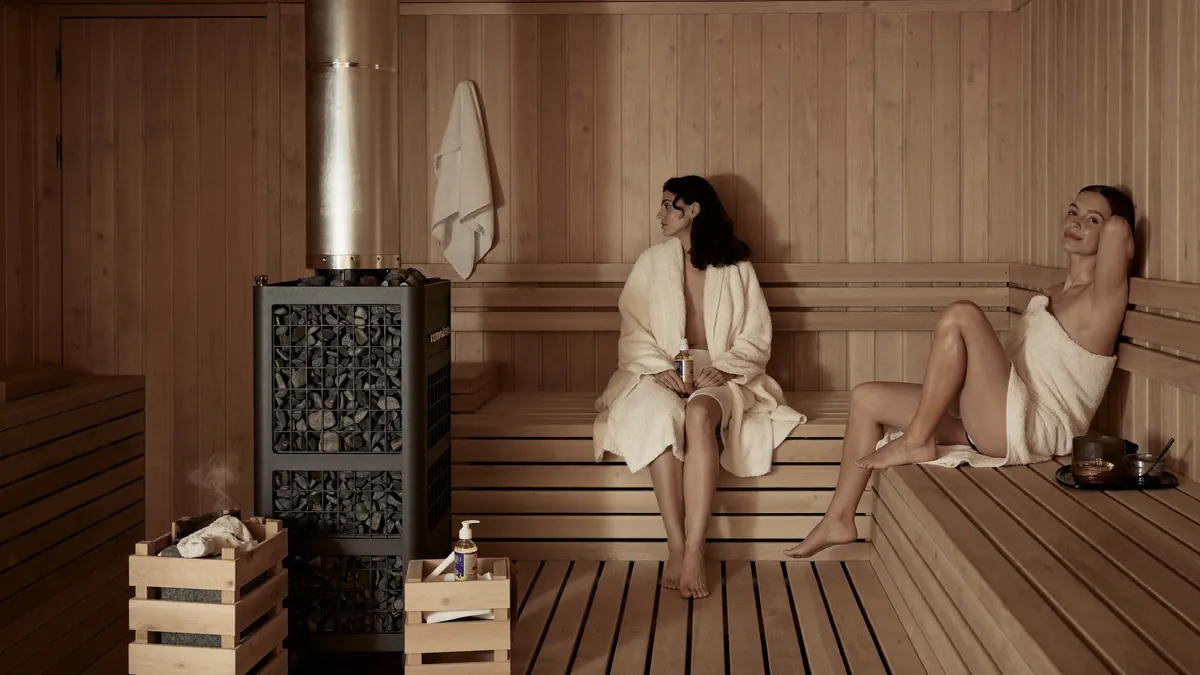
Spa Contrast Circuit: Equipment, Budgets and Session Pricing
Heat plus cold outsells either alone — in every project we have supplied. Circuit layouts by floor area, protocols in °C, budgets in USD and IDR, and the capacity math spas actually need.
Recovery · 7 min read
Gym Recovery Equipment List: Compression, Percussion and Cold Plunge
Which recovery equipment a gym should buy: compression boots, percussion guns, cold plunges, infrared and red light — brands we supply, indicative prices and three budget tiers.