Recovery · · 7 min read
How to Build a Profitable Ice Bath Business in Indonesia
Updated August 12, 2026 · by the WellnessEquip Indonesia supply desk
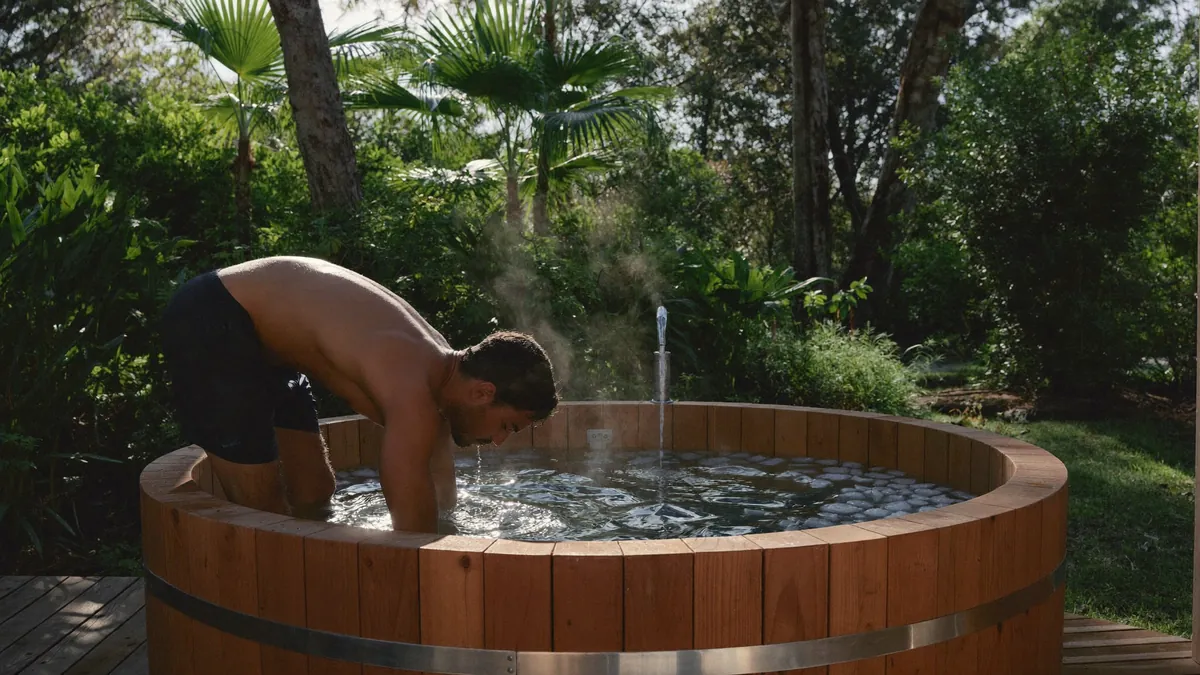
Over the past three years our supply desk at WellnessEquip Indonesia has equipped ice bath and recovery businesses as part of 100+ equipment projects — surf-recovery studios in Canggu, a breathwork-and-cold facility above the cliffs in Uluwatu, hotel recovery suites in Seminyak and two corporate wellness floors in Jakarta SCBD. The question we hear most is no longer “does cold therapy work?” but “can I actually make money with an ice bath business in Indonesia?” The short answer: yes, with some of the fastest payback periods we see anywhere in wellness — if you size the equipment for tropical conditions and take sanitation seriously. This guide shares the numbers we normally only walk through on calls.
Why the ice bath business took off in Indonesia
The Global Wellness Institute values the global wellness economy at roughly $6.3 trillion (2023), growing about 8% a year, and thermal and recovery experiences are among the fastest-growing slices of it. Indonesia sits in a sweet spot: 270+ million people, a fast-rising urban middle class, and Bali's tourism engine — around six million foreign visitors a year and climbing back above pre-pandemic levels — many of them exactly the demographic that pays for cold exposure: surfers, digital nomads, CrossFit athletes and longevity-curious travelers.
In Canggu, walk-in cold plunge sessions sell for Rp 160,000–290,000 ($10–18), and the busiest studios run 40–70 sessions a day in high season. In Jakarta the driver is different — office workers, corporate memberships, athletes training indoors — but the willingness to pay is the same or higher. Secondary cities like Surabaya and Bandung are 12–18 months behind Bali on this curve, which is precisely why the openings happening there now are getting first-mover pricing.
Four revenue models that actually work
- Walk-in sessions. Rp 160,000–290,000 per 3–6 minute plunge, usually bundled with sauna or breathwork into a 45–60 minute slot.
- Memberships. Rp 1.2–2.5 million per month ($75–155) for unlimited or 12-visit plans. Thirty members already cover most studios' fixed costs.
- Add-on to an existing gym or spa. The cheapest entry: you already pay rent and have foot traffic; the tub only has to earn its own electricity and cleaning.
- Events and workshops. Breathwork-and-ice evenings at Rp 350,000–500,000 per seat, 12–20 seats, twice a week. Several Ubud venues earn more from events than from walk-ins.
Equipment tiers and real costs
| Tier | What you get | Budget (USD) | Budget (IDR) | Best for |
|---|---|---|---|---|
| Entry / DIY | Chest freezer conversion or stock tank, manual ice top-ups, no filtration | $800–1,500 | Rp 13–24 million | Testing demand, personal use |
| Commercial single tub | Insulated plunge, 1 HP chiller, ozone + UV, 20-micron filtration | $4,500–9,000 | Rp 72–145 million | Studios up to ~25 sessions/day |
| Multi-tub circuit | 2–4 tubs, redundant 1.5–2 HP chillers, full sanitation loop, contrast add-ons | $15,000–35,000 | Rp 240–560 million | Dedicated recovery venues, hotels |
One sizing warning for the tropics. Bali ambient air runs 30–33°C and tap water arrives at 26–28°C. A chiller specified for European or North American ambient will run 24/7 here and die within a year — we have replaced several. Our rule of thumb: one horsepower of cooling per 400–500 liters of water if you want a stable 4–8°C in an open-air Indonesian setting, and oversize by another 30% if the tub sees direct sun.
One more distinction keeps quotes honest: the table above prices generic and custom commercial builds, a market whose costs we benchmark but do not control. Alongside them we now stock the branded units in our cold plunge and ice bath catalog — a generic commercial tub build runs $4,500–9,000 installed, while branded chiller systems such as the Plunge All-In (~$23,000) and Sun Home Cold Plunge Pro (~$22,000) land at roughly $21,000–23,000 with factory warranty and commissioning — a different tier of spend that buys integrated refrigeration, documented sanitation and a unit your insurer recognizes.
Operating costs nobody puts in the brochure
- Electricity. A 1 HP chiller draws 0.8–1.1 kW and in tropical ambient runs 10–14 hours a day: 300–450 kWh per month per tub, roughly Rp 500,000–800,000 ($30–50) at commercial tariffs of Rp 1,400–1,800/kWh.
- Water and treatment. Partial water changes weekly, cartridge filters monthly, ozone cells every 12–18 months. Budget Rp 800,000–1.5 million per month per tub.
- Staff. One trained attendant per shift at Rp 3.5–5 million per month covers supervision, timing and cleaning.
- Ice, if you skip refrigeration. Holding temperature with block ice in 32°C heat takes 60–100 kg a day at Rp 1,000–1,600 per kg. That is Rp 2–4 million a month — we break this trade-off down fully in our cold plunge vs ice bath comparison.
Sanitation: where ice bath businesses die
Cold water is not clean water. At 4–8°C bacteria multiply slower, but they do multiply, and a tub that hosts 25 sweaty bodies a day without filtration becomes a skin-infection generator within weeks. In our experience, folliculitis complaints in Google reviews have closed more cold plunge studios in Bali than competition ever has. The minimum commercial stack we specify: 20-micron mechanical filtration on a continuous loop, ozone or UV disinfection, daily pH and sanitizer checks logged on paper, and a full drain-and-scrub every 50–70 bathers. It adds perhaps $1,200–2,500 (Rp 19–40 million) to a build and it is the difference between a five-year business and a five-month one.
The ROI math on one commercial tub
| Line | Conservative month |
|---|---|
| Walk-ins: 18 sessions/day × 26 days × Rp 175,000 | Rp 81.9 million (~$5,100) |
| Memberships: 25 × Rp 1.5 million | Rp 37.5 million (~$2,340) |
| Operating costs (staff, power, water, chemicals, rent share) | −Rp 35–45 million |
| Net contribution | Rp 75–85 million (~$4,700–5,300) |
Against Rp 72–145 million of capex for a serious single-tub setup, well-located studios in Canggu or Seminyak routinely pay back in 3–6 months. In Denpasar, Sanur or Yogyakarta plan on 8–12 months — still exceptional compared with almost any other fitness investment we supply.
Want us to sanity-check your numbers? Talk to a supply manager on WhatsApp — a free 20-minute consult on sizing, chillers and layout, with no obligation to buy anything.
The honest DIY section
We sell equipment, so you would expect us to push the pro gear. The truth is more useful: some of our best long-term clients started with a chest freezer, proved demand, then upgraded. Here is where the line actually sits.
What you can genuinely do yourself
- A 300–400 liter chest freezer conversion — sealed seams, a timer, and a residual current device (RCD/GFCI) on the socket — is fine for personal use or a soft launch with friends and beta members.
- A stock tank plus bagged ice works for weekend pop-ups and beach events; buy ice the morning of, drain the same day.
- A basic recirculation loop — pond pump plus cartridge filter — extends water life between changes for a low-traffic setup.
- Simple siting decisions: shade, a gravity drain, a level concrete pad. No contractor needed.
Typical mistakes we get called in to fix
- No RCD/GFCI on 220V equipment standing in splash range. This is the dangerous one — please do not skip it.
- Undersized aquarium chillers that were rated for a 10°C pull-down at 25°C ambient and simply cannot hold 6°C in Bali heat.
- No filtration at all on a tub that quietly went from personal to commercial use — cloudy water, then the review that mentions a rash.
- Chest freezers rusting through within months in coastal air in Uluwatu or Batam.
- A 700 kg filled tub placed on an upper floor nobody checked for load.
When you need a professional
- You are selling 20+ sessions a day and downtime costs real money.
- You need insurance, permits or a hotel/spa integration, where inspectors ask for equipment documentation.
- Your electrical load passes ~2 kW continuous or wiring must run near water.
- You want warranty and a service SLA instead of marketplace roulette.
If you are unsure which side of the line you are on, send us photos and a floor plan on WhatsApp. The consultation is free, and if your DIY setup is safe and sufficient, we will tell you exactly that.
The upsell that doubles lifetime value: measurement
Studios that only sell cold compete on price. Studios that sell measurable recovery keep members for years. The pairing we install most often: heart-rate-variability tracking with Firstbeat Life HRV monitoring so members see their recovery scores respond to regular plunging, and quarterly baseline scans on an InBody 970 body composition analyzer. Both slot into a testing corner of 4–6 m² and support packages at Rp 500,000–1.5 million. Browse the wider cardiovascular health equipment category for screening options, and see our gym recovery zone guide if the plunge will live inside an existing fitness floor.
Where to start
Pick the revenue model first, then the tier, then the tub — never the other way around. We source plunges, chillers, sanitation systems and diagnostics from the USA, Finland, Korea and vetted Chinese OEMs, handle the import paperwork, and deliver door-to-door across Indonesia from our Denpasar and Jakarta warehouses — delivery windows confirmed with your quote; see delivery details on our wellness equipment in Canggu page. Message our team on WhatsApp and we will map your budget to a setup that pays for itself before the year is out.
Disclaimer: this article is provided for informational purposes only and is not engineering, medical or legal advice. WellnessEquip Indonesia accepts no liability for injury, damage or losses arising from self-built or self-modified cold-water systems. Always use a licensed electrician for any installation near water.
The WellnessEquip Indonesia supply desk sources, imports and installs wellness equipment across Indonesia. Questions about your project? Message a supply manager on WhatsApp — honest answers, no hard sell.
— FAQ
Frequently asked questions
How much does it cost to start an ice bath business in Indonesia?
A commercial single-tub setup with a properly sized chiller, filtration and ozone/UV sanitation runs $4,500–9,000 (Rp 72–145 million) installed. A multi-tub recovery venue is $15,000–35,000 (Rp 240–560 million). DIY chest-freezer starts cost under $1,500 but are only suitable for testing demand, not for paid traffic. Branded turnkey chiller systems we stock — Plunge All-In, Sun Home Cold Plunge Pro — sit in a separate tier at roughly $21,000–23,000 including factory warranty and commissioning.
How profitable is an ice bath business in Bali?
Well-located studios in Canggu or Seminyak selling 18+ sessions a day at Rp 160,000–290,000 plus memberships typically net Rp 75–85 million a month per tub and pay back equipment in 3–6 months. Secondary locations like Denpasar or Yogyakarta usually see payback in 8–12 months.
What temperature should a commercial ice bath be?
Most Indonesian studios run 4–8°C for experienced clients and 10–15°C for beginners. Holding those temperatures in 30–33°C ambient requires roughly 1 HP of chiller capacity per 400–500 liters of water — undersized chillers are the most common equipment failure we see.
Can I start with a DIY chest freezer ice bath?
For personal use or a soft launch, yes — with sealed seams and an RCD/GFCI-protected socket. For paid sessions you need filtration, sanitation and reliable temperature control, both for client safety and for licensing and insurance. We offer a free WhatsApp consult to tell you honestly which side of that line you are on.
— Keep reading
Related guides
Recovery · 7 min read
Cold Plunge vs Ice Bath: An Operator's Honest Comparison
The terms get used interchangeably, but for a business the difference is thousands of dollars a year. Temperatures, ice logistics, hygiene and the exact crossover point where a chiller wins.
Recovery · 7 min read
Gym Recovery Equipment List: Compression, Percussion and Cold Plunge
Which recovery equipment a gym should buy: compression boots, percussion guns, cold plunges, infrared and red light — brands we supply, indicative prices and three budget tiers.
Recovery · 7 min read
Spa Contrast Circuit: Equipment, Budgets and Session Pricing
Heat plus cold outsells either alone — in every project we have supplied. Circuit layouts by floor area, protocols in °C, budgets in USD and IDR, and the capacity math spas actually need.