Recovery · · 7 min read
Spa Contrast Circuit: Equipment, Budgets and Session Pricing
Updated August 12, 2026 · by the WellnessEquip Indonesia supply desk
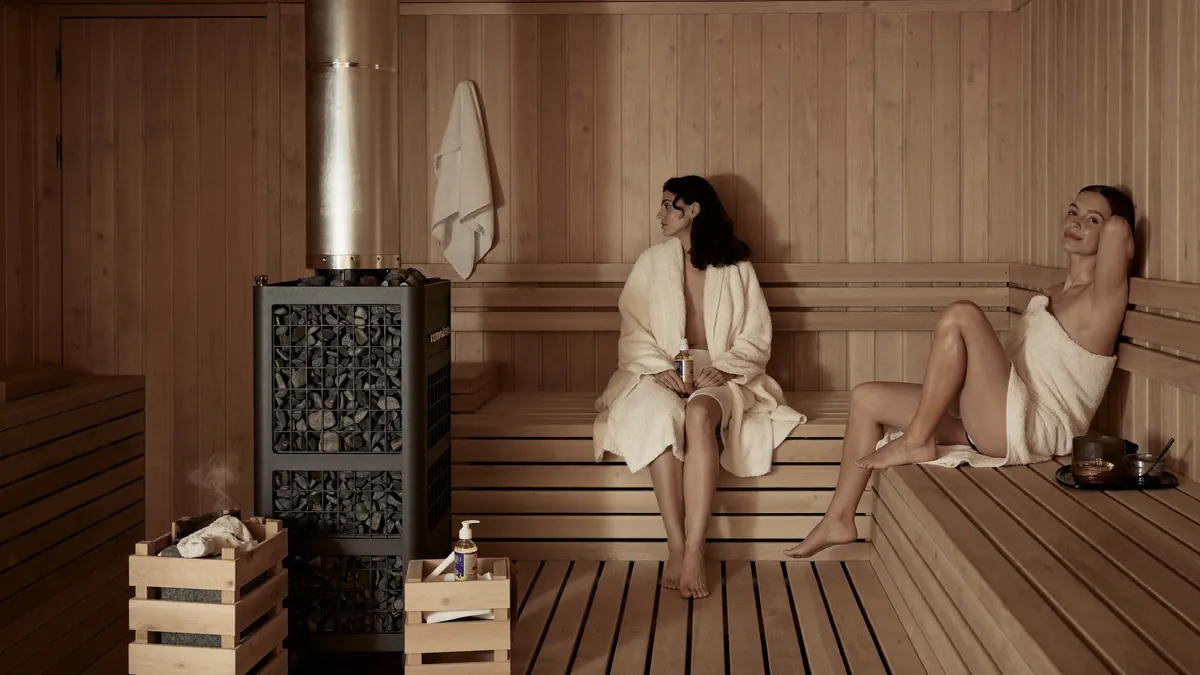
Last quarter a spa director at a Nusa Dua resort asked our supply desk a question we now hear monthly: “we have massage covered — what do we build in the two rooms next door?” Our answer, backed by every recovery project WellnessEquip Indonesia has equipped in three years, is a contrast bathing circuit. Heat plus cold, sequenced properly, consistently outsells either standalone: it needs no consumables, almost no treatment labor, and guests describe the effect in a way no facial ever earns. Here is how to design one that pays for itself — protocols, floor plans, budgets and the safety layer most spas forget.
What a spa contrast circuit actually is
Contrast therapy alternates deliberate heat exposure with deliberate cold exposure in timed rounds. The workhorse protocol we program into client circuits: 10–15 minutes of heat — an 80–90°C Finnish sauna or a 40–42°C hot soak — followed by 1–3 minutes of cold at 6–10°C, then 5–10 minutes of rest, repeated for three to four rounds. The heat-to-cold time ratio sits around 3:1, and athletes typically finish on cold while relaxation-focused guests finish on rest. The vascular gymnastics — vessels dilating in heat, constricting sharply in cold — is what guests feel, and the research base, while still maturing, points usefully in one direction: reviews of cold-water immersion and contrast bathing report reduced delayed-onset muscle soreness and consistently strong perceived-recovery effects versus passive rest. We tell clients to sell the experience and the consistency, and let the science carry itself honestly.
Why spas specifically should care
A massage sells one therapist-hour per guest-hour. A contrast circuit sells guest-hours with almost no labor attached — one attendant can supervise eight guests moving through rounds. Margins follow. And demand is real: the Global Wellness Institute puts wellness tourism growth ahead of overall tourism growth, with wellness travelers spending materially more per trip than the average visitor — exactly the guest profile filling resorts from Jimbaran to Uluwatu. Bali spas that added thermal circuits report something else too: male guests, historically the hardest spa demographic to activate, book contrast sessions without being dragged. We unpack the broader revenue logic in our guide to growing spa revenue with wellness technology.
Three circuit layouts by floor area
| Footprint | What fits | Budget (USD) | Budget (IDR) | Guests/hour |
|---|---|---|---|---|
| Compact, 25–35 m² | 4–6 person sauna, 1 cold plunge, rain shower, 4 rest loungers | $18,000–30,000 | Rp 290–480 million | 6–8 |
| Signature, 50–80 m² | 6–8 person sauna, steam room, 2 plunges at different temperatures, experience showers, relax zone | $45,000–80,000 | Rp 720 million–1.28 billion | 12–16 |
| Destination, 120 m²+ | Multiple heat rooms, plunge pool, hot soak, ice fountain, tiered relax hall, hydration bar | $120,000–250,000 | Rp 1.9–4 billion | 25–40 |
The compact tier is where most Indonesian spas should start: it converts two underused treatment rooms, and at Nusa Dua or Seminyak day-spa pricing it reaches payback before the signature tier has finished construction. Design rule one: the rest area is not decoration — rounds end there, and if guests have nowhere comfortable to cool down, they cut the circuit short and your perceived value drops with it. Design rule two: floors, drainage and slip-rating are half the engineering; wet guests moving between 85°C and 8°C need routes a lawyer would approve of.
The equipment stack, honestly specified
- Heat. A commercial Finnish sauna with a 9–12 kW heater, built in thermo-treated timber with designed ventilation — tropical humidity kills casual builds, as we detail in our sauna business guide for Indonesia. Where construction time or a landlord rules out a custom build, a factory-built cabin such as the Clearlight Sanctuary 2 (~$20,500) from our infrared sauna range installs in days instead of weeks.
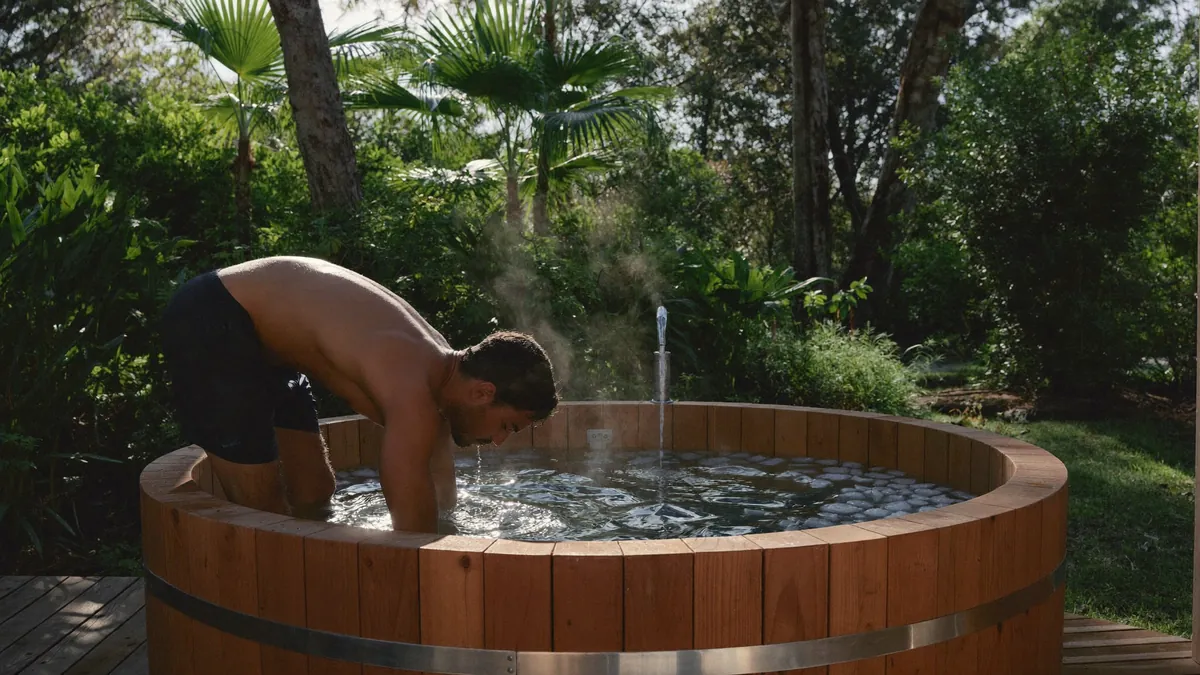
- Cold. A chiller-driven plunge holding 6–10°C with 20-micron filtration and ozone or UV. In 31°C ambient, size one horsepower of cooling per 400–500 liters. The chiller-versus-ice decision is covered in our cold plunge vs ice bath comparison — for daily spa operation the chiller wins, every time. A generic commercial plunge lands at $4,500–12,000; the branded systems we stock — the Plunge All-In (~$23,000) and Sun Home Cold Plunge Pro (~$22,000) — sit higher, and the difference buys factory warranty and commissioning, which matters when the circuit is your headline amenity.
- Transitions. Rain or bucket showers between stations, non-slip flooring, and a visible round timer — guests follow the protocol when the protocol is on the wall.
- Rest. Loungers, drinking water, towel service. Cheapest components, highest impact on reviews.
Pricing and the capacity math
Indonesian spas are charging Rp 250,000–600,000 ($16–38) for a 60–90 minute self-guided circuit, with guided small-group sessions at the top of that range. Run the compact layout at just six guests per hour, eight operating hours, 60% utilization: about 29 guest-sessions a day. At an average Rp 350,000 that is Rp 10 million a day gross, roughly Rp 260 million ($16,000) a month at 26 operating days. Even after staffing, 15–20% energy and maintenance overhead and a rent share, a Rp 290–480 million compact build typically returns its capital in 4–8 months. Membership products — Rp 1.5–3 million monthly for locals in Sanur or Jakarta — smooth the low season, and treatment pairings (circuit before massage) lift both tickets.
Want a layout sketch for your actual floor plan? Send your dimensions to a supply manager on WhatsApp — we will return a circuit configuration with landed equipment pricing, free.
The safety layer that doubles as a product
Contrast therapy stresses the cardiovascular system on purpose — which is exactly why screening belongs at your front desk, not in your terms and conditions. Guests with uncontrolled hypertension, cardiac conditions or pregnancy need medical clearance before extreme temperature swings. The operators we respect turn this duty into revenue: a check-in blood pressure reading on a clinical-grade Omron HBP-8000 professional blood pressure monitor (fifteen seconds, logged), and a premium “vascular age” assessment on a VaSera VS-2000 arterial stiffness analyzer sold at Rp 500,000–900,000 as a before-and-after around an eight-week circuit membership. Screening becomes an upsell, your risk file becomes documentation, and your circuit becomes a program rather than a room. The full screening stack is in our cardiovascular health equipment category.
Staffing and the guest journey
A contrast circuit succeeds on choreography, not just hardware. The staffing model we recommend for compact and signature tiers is deliberately lean: one trained attendant per shift, cross-trained from your existing spa team, owning a written guest journey. It looks like this: arrival and blood-pressure screen at the desk; a 90-second orientation — how many rounds, how long in each station, where the timer is, and the two signals to stop (dizziness, numbness); round one lightly supervised; rounds two to four self-guided; then the lounge, where the rebooking conversation happens. Two field observations worth money. First, guests who receive a proper orientation complete more rounds, report better sessions and rebook at roughly twice the rate of guests waved through the door — the orientation is your retention tool, so script it and audit it monthly. Second, the relax lounge is where memberships are sold, not the reception desk: a guest lying in post-contrast calm with a cold drink is the most receptive customer your spa will ever have, so equip the attendant with a one-page membership offer and a QR code, and add small upsells — electrolyte drinks at Rp 35,000–50,000, cold towels, a retail shelf — that quietly lift ticket size by 10–15%. Ubud retreat operators take this further and fold the circuit into multi-day programs, where daily contrast sessions become the spine of the retreat schedule rather than an optional extra.
Operating notes from installed circuits
- Log sauna and plunge temperatures twice daily; drift is your earliest warning of failing heaters or undersized chillers.
- Schedule plunge drain-and-clean by bather count (every 50–70 bathers), not by calendar — high season compresses the interval.
- Expect combined energy costs of Rp 4–7 million a month for a compact circuit at Indonesian commercial tariffs.
- Train attendants on a written heat-illness and cold-shock response protocol; rehearse it quarterly like a fire drill.
Where to start
If you already run heat, add cold — that is the cheaper half and the bigger perceived upgrade. If you are starting clean, build the compact circuit and leave wall space to grow. WellnessEquip Indonesia sources saunas, plunges, chillers and the screening hardware from Finland, Germany, Korea and vetted OEM partners, handles import and delivers door-to-door from Denpasar and Jakarta warehouses — delivery windows confirmed with your quote across Bali including equipment delivery to Nusa Dua, and scheduled freight to Jakarta, Surabaya and beyond. Talk to a supply manager on WhatsApp and get a circuit spec matched to your space and budget.
The WellnessEquip Indonesia supply desk sources, imports and installs wellness equipment across Indonesia. Questions about your project? Message a supply manager on WhatsApp — honest answers, no hard sell.
— FAQ
Frequently asked questions
What is a contrast bathing circuit in a spa?
A sequenced facility where guests alternate heat exposure — an 80–90°C sauna or 40–42°C hot soak — with 1–3 minutes of cold immersion at 6–10°C, followed by rest, for three to four rounds. It runs largely self-guided, so one attendant can supervise many guests at once.
What temperatures are used in contrast therapy?
Typical commercial protocols pair 80–90°C sauna heat (or 40–42°C hot water) with 6–10°C cold plunges, at roughly a 3:1 heat-to-cold time ratio. Beginners start with milder cold around 10–15°C and shorter rounds, progressing as they adapt over several weeks.
How much does it cost to add contrast therapy to a spa?
A compact 25–35 m² circuit — sauna, cold plunge, shower and rest area — runs $18,000–30,000 (Rp 290–480 million) installed. Mid-size signature circuits cost $45,000–80,000, and destination thermal suites exceed $120,000. Compact circuits in strong Bali locations typically pay back in 4–8 months. An all-branded pair — a Clearlight cabin plus a Plunge or Sun Home chiller system — raises the equipment line to roughly $43,000 in exchange for factory warranties.
Who should avoid contrast therapy?
Guests with uncontrolled high blood pressure, cardiovascular conditions or pregnancy should get medical clearance before extreme hot-cold cycling. Commercial circuits should screen at check-in — a quick clinical blood pressure reading — and keep trained staff and a written emergency protocol on site.
— Keep reading
Related guides
Recovery · 7 min read
Starting a Sauna Business in Indonesia: Real Costs, Real Margins
Selling heat in a country where it is already 31°C sounds absurd — until you see the booking calendars. Costs, electricity math, permits and payback for saunas in Bali and Jakarta.
Recovery · 7 min read
Cold Plunge vs Ice Bath: An Operator's Honest Comparison
The terms get used interchangeably, but for a business the difference is thousands of dollars a year. Temperatures, ice logistics, hygiene and the exact crossover point where a chiller wins.
Business · 6 min read
How Wellness Technology Delivers a Measurable Spa Revenue Increase
Massage prices have a ceiling; measured outcomes do not. How Bali and Jakarta spas use skin scanners and body metrics to lift average ticket 40–70% — with the payback math shown line by line.