Trends · · 6 min read
The Medical Fitness Trend: Turning Gyms Into Health Providers
Updated August 12, 2026 · by the WellnessEquip Indonesia supply desk
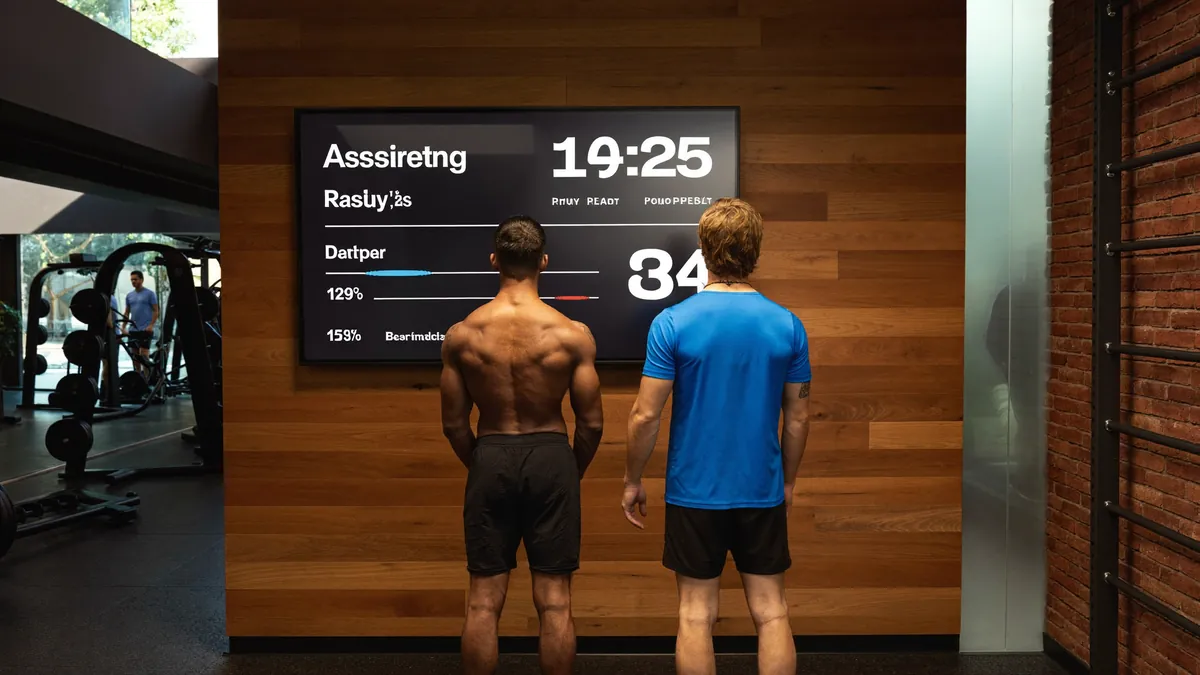
A gym owner from Kemang put the whole trend into one question when he visited our Jakarta showroom last quarter: can my club do what the check-up clinic does? Ten years ago the answer was no — testing lived in hospitals, training lived in gyms, and the two never exchanged data. In 2026 the answer is a qualified yes, and the qualified part is exactly what this article covers. Our supply desk has now fitted testing equipment into strength studios in Canggu, physio practices in Denpasar and corporate gyms in Jakarta towers, so we have watched the medical fitness trend move from conference slide to purchase order. Here is what it means, why Indonesia is unusually ready for it, and what it costs to enter properly.
What medical fitness actually means
Medical fitness is the convergence of clinical assessment and exercise programming into one supervised loop. A member is screened with clinical-grade tools — body composition, blood pressure, movement quality, cardiorespiratory fitness — then trained against those numbers, then re-tested on a schedule. The concept grew out of the exercise-is-medicine movement and hospital-affiliated fitness centers in the US and Europe, where physicians prescribe supervised training the way they prescribe medication. The commercial translation is simpler: a gym that can produce clinical-quality baseline and progress data stops competing with every other gym on price and starts competing with clinics on outcomes — while charging accordingly.
The direction of travel goes both ways. Gyms are adding testing rooms; clinics and physio practices are adding supervised training floors; and insurers are quietly connecting the two, because a member whose blood pressure and visceral fat verifiably improve is cheaper to insure. All three buyer types now appear in our order book, and they buy from the same equipment list.
Why Indonesia is ready now
The epidemiology makes the case before any marketing does. Roughly one in ten Indonesian adults lives with diabetes according to International Diabetes Federation estimates, national health surveys put hypertension above 30% of adults, and the urban workforce is overwhelmingly sedentary. At the same time, the paying market has changed: corporate HR departments in Jakarta budget for measurable employee health, premium gym members in Kemang and Senopati arrive quoting their wearable data, and physicians — long skeptical of gyms — refer patients to facilities that can document what they do. Add insurance pilots that discount premiums for verified health improvement and you get a rare alignment: medical need, consumer demand and payer incentive all pointing at the same service.
There is also a supply-side reason: the equipment finally fits the room. A decade ago metabolic testing meant a fixed laboratory and a six-figure budget; today the same clinical outputs come from devices that share a 20 square meter studio corner, run on standard power and export reports a physician can actually read. When hardware stops dictating architecture, adoption follows.
The medical fitness service stack
Every successful medical fitness offer we have equipped runs the same three-layer stack: assess, program, re-test. The assessment layer is where equipment decisions live, and three devices carry most of the load.
- Body composition. A clinical-grade analyzer like the ACCUNIQ BC730 body composition analyzer (~$22,500, ≈Rp 360 million) measures muscle mass, visceral fat and segmental balance in under a minute — the baseline every program is built on.
- Cardio-metabolic testing. A KORR CardioCoach metabolic analyzer (~$15,000) brings VO2 max and resting metabolic rate testing out of the hospital lab, letting trainers set zones and calorie targets from measured data instead of formulas.
- Movement quality. A Kinetisense motion capture system (~$15,000) turns functional movement screening into objective joint-angle data — the piece physios and doctors respect most when you ask for referrals.
Full alternatives at every price point are in our metabolic testing catalog and body composition range. The ~ figures are indicative landed prices — a supply manager confirms the final number for each order, which moves with the exchange rate, the freight method and the delivery route.
What the programs earn
| Offer | What is included | Indonesia price | Equipment needed |
|---|---|---|---|
| Baseline assessment | Body composition, blood pressure, movement screen | Rp 750,000–1,500,000 | $40,000–45,000 |
| Full assessment | Baseline plus VO2 max and metabolic rate | Rp 1,500,000–2,500,000 | $55,000–60,000 |
| 12-week medical fitness program | Assessment, supervised training, re-test | Rp 8,000,000–20,000,000 | Uses same stack |
| Corporate program per employee | Screening day plus 8-week program | Rp 2,000,000–5,000,000 | Uses same stack |
The re-test is the profit engine: it costs the operator almost nothing, proves the program worked, and converts a 12-week client into an annual one. Gyms we supply report that members inside assessment-based programs renew at markedly higher rates and refer more — the data does the selling. Corporate contracts amplify the effect: one employer deal fills weekday morning slots that memberships never touch, smoothing utilization across the entire week.
Want this modeled for your facility? Send member count and space, and we will size a stack with Indonesian program pricing — talk to a supply manager on WhatsApp.
Three patterns from our order book
The trend looks different in each city, so here are the three installs we see repeating. A strength studio in Canggu added a $50,000 assessment room — body composition, metabolic cart, HRV — and moved its top tier from Rp 2 million to Rp 3.5 million a month with testing bundled; the room reached payback in under 18 months, mostly on tourist walk-in tests. A physio practice in Denpasar added movement capture and body composition to bridge patients from rehab into paid training blocks, keeping revenue that previously walked out the door at discharge. And a corporate gym in a Jakarta SCBD tower added a screening corner used for quarterly employee testing days — the equipment is booked solid weeks in advance and the operator now sells the same service to neighboring towers. Regional notes for these markets sit on our Canggu page and Denpasar page.
A 90-day rollout plan
- Days 1–14: define the offer. Pick two programs maximum — a baseline assessment and one 12-week program. Price against local clinics, not other gyms.
- Days 15–45: equipment and room. A 15–25 square meter room with air conditioning and stable power is enough. Order early: 6–10 week lead times apply to imported devices, though we hold fast-moving units in Jakarta and Denpasar for priority delivery.
- Days 30–60: train the team. Two staff minimum per device, plus a written screening protocol that defines when a member is referred to a physician. We include operator training with every install.
- Days 45–75: soft launch. Test existing members at a founding price; collect before-and-after data with consent for anonymized marketing.
- Days 75–90: open referral channels. Bring your movement and body composition reports to two local clinics and one insurer; the reports open doors that brochures do not.
Boundaries and pitfalls
The qualified part of the yes: a gym running clinical-grade tools is still not a clinic, and the operators who thrive respect the line. Screen and measure, never diagnose — findings outside normal ranges get referred to a physician, and your protocol should say so in writing. Check device classification: some equipment is wellness-grade while some carries medical registration requirements under Kemenkes AKL rules, and we confirm the status of every unit before you commit. Calibrate and document — clinical partners will ask. And do not skip the physiologist: one qualified hire elevates the entire offer from gimmick to service. Where this trend intersects with your wider floor plan, two companion reads help: VO2 max testing as a premium service and 3D body scanning for gyms; for the recovery side of the house, see adding a recovery zone to your gym.
Medical fitness is the rare trend where the equipment, the demand and the payers arrived at the same time. If you run a gym, studio or clinic anywhere from Bandung to Batam and want to add clinical-grade assessment, message our supply desk on WhatsApp — we will send a costed stack, training plan and honest device-classification notes within two business days.
The WellnessEquip Indonesia supply desk sources, imports and installs wellness equipment across Indonesia. Questions about your project? Message a supply manager on WhatsApp — honest answers, no hard sell.
— FAQ
Frequently asked questions
What is the medical fitness trend?
Medical fitness is the convergence of clinical assessment and supervised exercise into one loop: members are screened with clinical-grade tools, trained against their numbers, and re-tested on a schedule. It grew from hospital-affiliated fitness centers and the exercise-is-medicine movement, and in 2026 gyms, clinics and insurers are all investing in it.
What equipment does a medical fitness program need?
The core assessment stack is a clinical body composition analyzer, a metabolic analyzer for VO2 max and resting metabolic rate, and a movement capture system. In Indonesia that stack lands at $55,000–60,000 (roughly Rp 880–960 million), while a baseline-only setup starts near $40,000.
How much can a gym charge for fitness testing in Indonesia?
Current market pricing runs Rp 750,000–1,500,000 for a baseline assessment, Rp 1,500,000–2,500,000 with VO2 max included, and Rp 8–20 million for 12-week assessment-based programs. Corporate packages price at Rp 2–5 million per employee, and re-tests carry near-zero marginal cost.
Can a gym legally offer health testing in Indonesia?
Wellness-grade assessment devices can be operated by trained fitness staff, while medical-class devices carry Kemenkes AKL registration requirements and stricter rules. The safe pattern is to screen and measure without diagnosing, keep a written referral protocol to physicians, and confirm each device's classification before purchase — something we do for every quote.
— Keep reading
Related guides
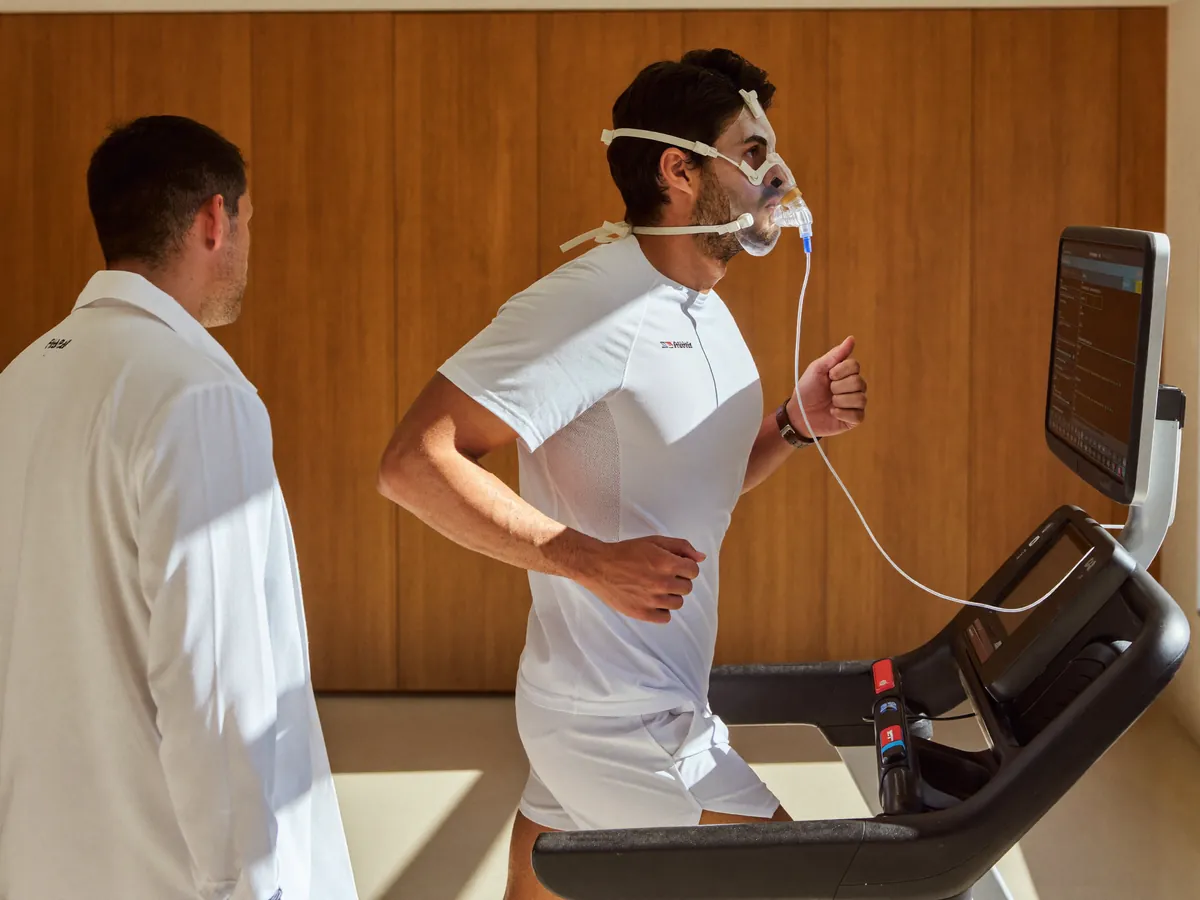
Buyer Guides · 6 min read
VO2 Max Testing as a Revenue Line: Equipment, Protocols and Pricing
VO2 max went from lab curiosity to the number longevity clients ask for by name. Here is the equipment, the test protocols, what Indonesian facilities charge per test, and the payback math from real installations.
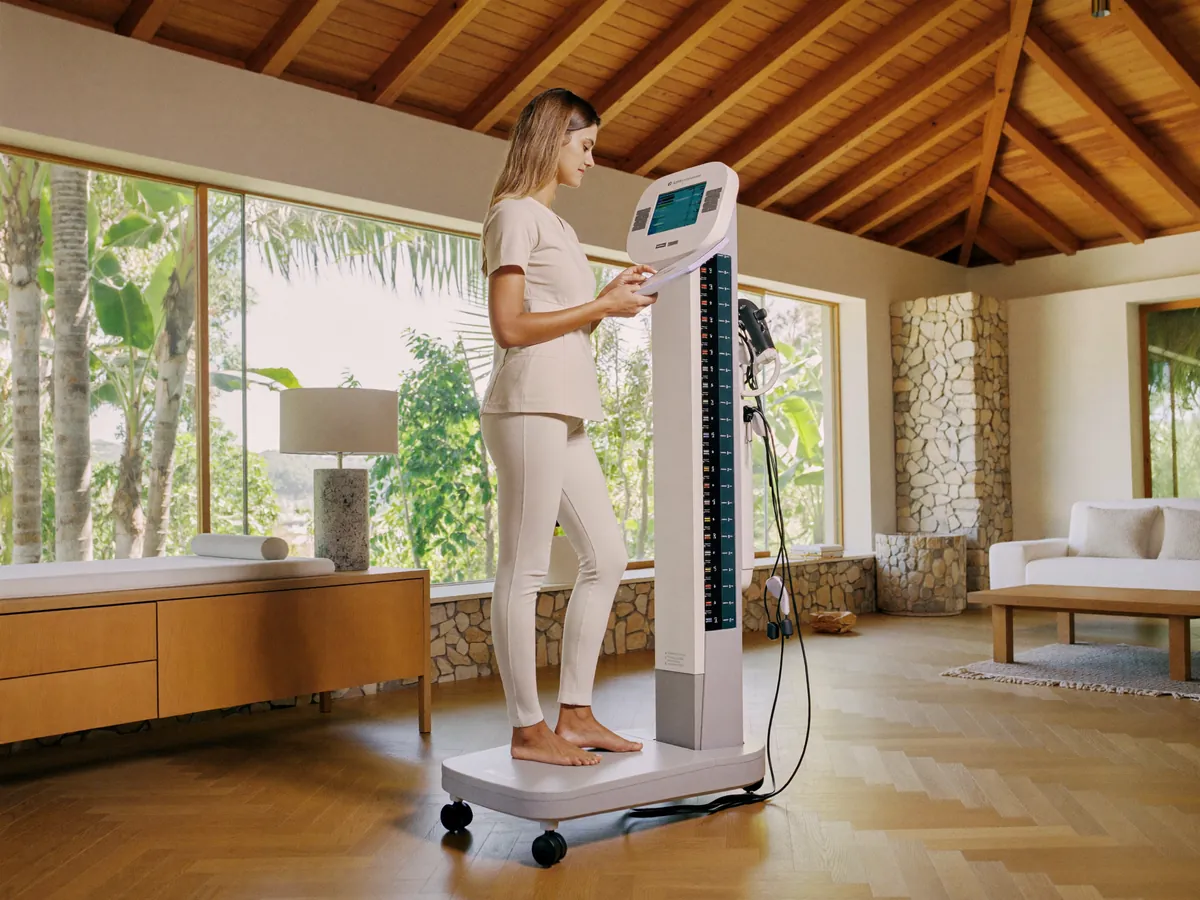
Buyer Guides · 6 min read
3D Body Scanning for Gyms and Studios: Which Scanner to Buy
Members quit when they cannot see progress. We compare Fit3D, Styku, Formetric 4D and Kinetisense — scanning tech, accuracy, USD/IDR pricing and the retention math from gyms we have equipped across Indonesia.
Recovery · 7 min read
Gym Recovery Equipment List: Compression, Percussion and Cold Plunge
Which recovery equipment a gym should buy: compression boots, percussion guns, cold plunges, infrared and red light — brands we supply, indicative prices and three budget tiers.