Business · · 6 min read
Metabolic Testing: The Missing Engine in Your Weight-Loss Program
Updated August 12, 2026 · by the WellnessEquip Indonesia supply desk
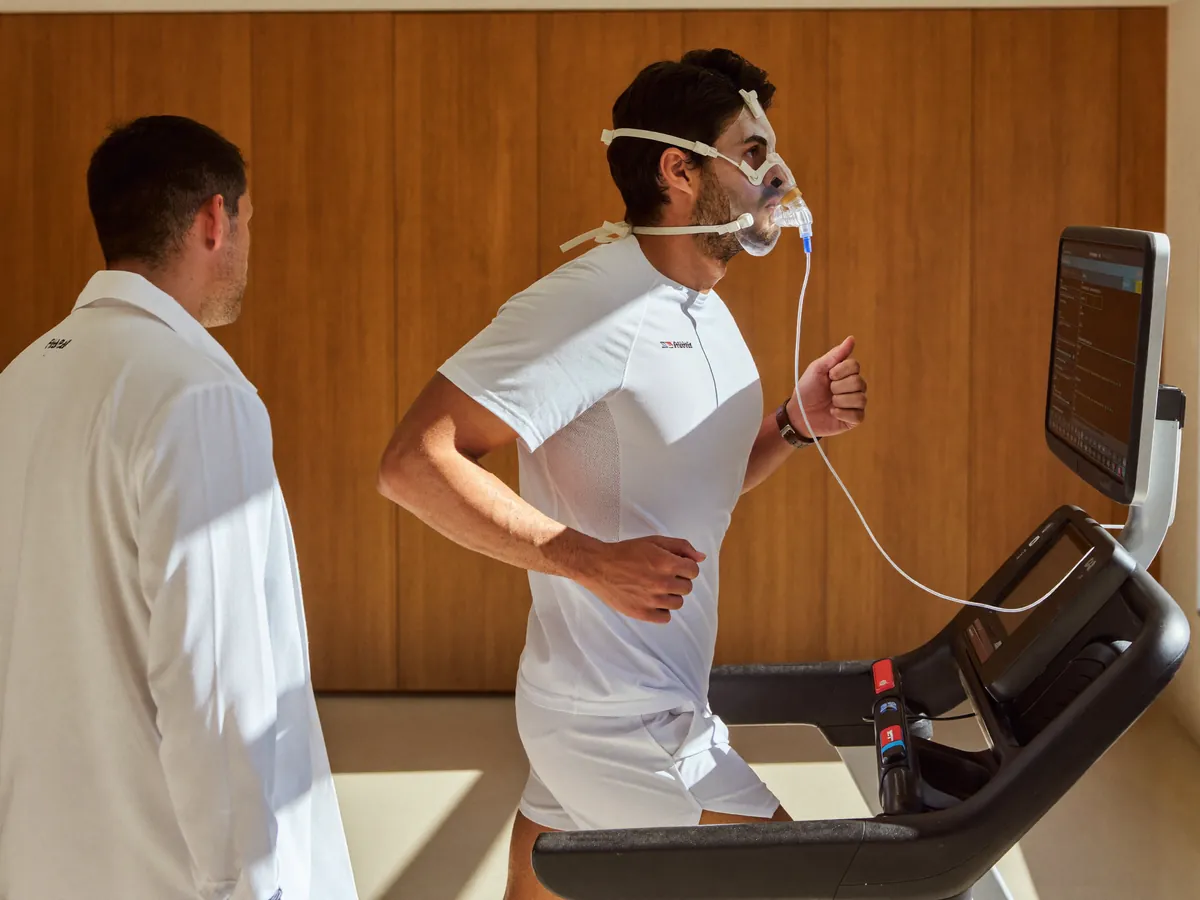
Over the past three years our supply desk has installed metabolic testing systems across Indonesia as part of 100+ equipment projects — weight-loss clinics in Jakarta, functional gyms in Canggu, longevity centres in Ubud. One pattern repeats everywhere: programs that measure resting metabolic rate before prescribing a single calorie keep clients two to three times longer than programs that guess from a formula. Weight loss is a trust business, and nothing builds trust like a number measured from the client's own breath. Here is how metabolic testing works commercially, what the equipment really costs in 2026, and how to package it so the hardware pays for itself inside the first year.
Why calorie formulas quietly kill weight-loss programs
Most programs still prescribe intake from Mifflin-St Jeor or Harris-Benedict equations. Those formulas were built on population averages, and individual resting metabolic rates deviate from the predicted value by more than 10% in roughly one client out of three — sometimes by 300–500 kcal per day. Prescribe 1,600 kcal to a woman whose true RMR is 1,150 and she stalls, blames herself and quits by week five. Prescribe the same plan to someone burning 2,050 at rest and she is needlessly starving, binges and quits by week three. Either way the program loses a client, a renewal and every referral that client would have brought.
Indirect calorimetry — measuring oxygen consumed and carbon dioxide produced through a mask or canopy — replaces the guess with a measurement accurate to within 3–5%. A 15-minute test returns the client's actual daily burn, and the respiratory exchange ratio shows whether they are burning mostly fat or mostly carbohydrate at rest. That is the difference between “eat less, move more” and a personalised prescription clients will happily pay premium rates for.
The three-test stack behind serious weight-loss programs
1. Resting metabolic rate (RMR)
The anchor measurement: fasted, seated, 10–20 minutes. Repeating it every four to six weeks catches metabolic adaptation — the natural downshift in energy expenditure as weight drops — so coaches adjust intake before a plateau turns into a cancellation. In our experience the week-six re-test is the single strongest retention moment in any weight-loss program.
2. Exercise metabolism and fat-max
A graded test on a bike or treadmill maps the exact intensity at which the client oxidises the most fat per minute. Training prescriptions built on a personal fat-max zone convert far better than generic cardio advice, and the test itself upsells naturally into personal-training blocks. We covered the commercial side in our guide to VO2 max testing as a premium service.
3. Body composition
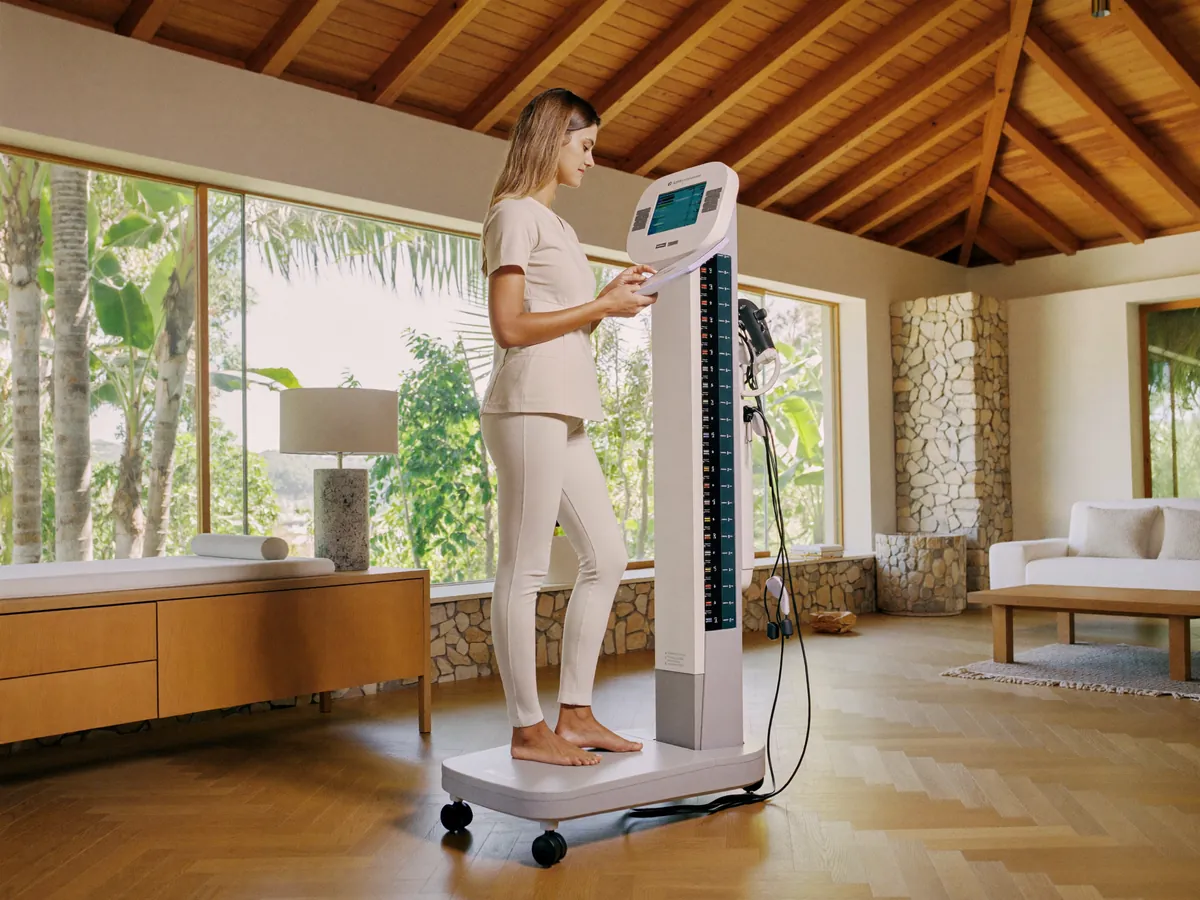
Scale weight hides the story. A medical-grade analyzer such as the InBody 970 body composition analyzer separates fat mass from skeletal muscle, so the client who “only” lost one kilogram discovers she actually dropped 2.4 kg of fat while gaining 1.4 kg of muscle. That reframe rescues renewals every single week. Our body composition analyzer buyer's guide compares the main options in depth.
What metabolic testing equipment costs in Indonesia (2026)
| Device | Best for | Typical price (USD) | Approx. price (IDR) |
|---|---|---|---|
| COSMED Q-NRG metabolic cart | Clinical-grade RMR for clinics and hospital wellness wings | ~$60,000 | ≈Rp 960 juta |
| PNOE metabolic analyzer | Portable RMR + VO2 for gyms and studios | ~$24,000 | ≈Rp 385 juta |
| KORR CardioCoach | Entry-level RMR and submax VO2 | ~$15,000 | ≈Rp 240 juta |
| InBody 970 | Body composition tracking between tests | ~$90,000 | ≈Rp 1.45 miliar |
The ~ figures are indicative landed estimates: the final number is confirmed by a supply manager, because it moves with the exchange rate, the freight method and the delivery route. Browse current stock and DDP pricing in our metabolic testing equipment catalog — units ship from our Jakarta and Denpasar warehouses with installation and staff certification included.
Talk to a supply manager on WhatsApp — tell us your client volume and budget, and we will recommend a clinical cart or a portable analyzer within one working day.
Program design: the 12-week metabolic reset
The structure we see working from Seminyak studios to Jakarta SCBD clinics looks like this:
- Week 0 — baseline: RMR, body composition and a fat-max test in one 60-minute visit, priced at Rp 2.5–3.5 juta ($155–215) or folded into the program fee.
- Weeks 1–5 — execution: nutrition targets set from measured RMR, training zones from fat-max, plus a two-minute body composition check-in each week.
- Week 6 — re-test: RMR repeated and intake adjusted for metabolic adaptation. This is precisely where formula-based competitors lose clients to plateaus.
- Week 12 — exit testing: a full re-test with a before-and-after report, then graduation into a maintenance membership with quarterly testing.
Programs anchored on measurement sell in Indonesia at Rp 8–18 juta ($490–1,100) for 12 weeks — a 30–60% premium over generic coaching — because the client can see exactly what they are paying for at every stage.
The ROI math for a gym or clinic
Take a portable analyzer landed at around $24,000 (about Rp 385 juta). Six standalone tests per week at Rp 1.5 juta each is roughly Rp 36 juta per month in testing revenue; even after staff time and consumables, the hardware pays back in twelve to fourteen months on testing fees alone. The bigger lever is retention: lift 12-week completion from 40% to 65% across 30 clients per quarter with an average program value of Rp 12 juta, and you protect roughly Rp 90 juta of revenue per quarter that used to walk out the door. Testing is not a gadget line on the menu — it is retention infrastructure.
Where it is working: Canggu, Jakarta SCBD, Surabaya
A functional training gym near Batu Bolong in Canggu now runs RMR plus InBody as mandatory onboarding and reports that members with a baseline test book three times more personal-training sessions. An executive clinic in Jakarta SCBD folds cart-based metabolic testing into its screening menu — the same logic we describe in designing executive health screening packages. A hospital wellness wing in Surabaya uses metabolic testing to anchor medically supervised weight management for pre-diabetic patients, and retreat venues around Ubud add exit testing so guests fly home with numbers instead of impressions. If you operate in the capital, our wellness equipment in Jakarta page covers delivery and installation timelines; across Bali we deliver and install from Denpasar stock on a schedule confirmed with your quote.
Space, staffing and consumables: the ops nobody budgets
Metabolic testing needs less infrastructure than most owners expect, but the details decide data quality. Reserve a quiet 6–8 m² room with stable air-conditioning at 22–24°C — RMR readings drift in hot or noisy spaces, and a testing room placed next to the group-class studio in one Bandung gym cost its owner two months of unreliable baselines before anyone connected the dots. Staffing is one trained operator per session: a certified trainer or nurse runs the protocol confidently after two days of hands-on training, which we deliver at installation and repeat free for new hires within the first year. Budget consumables honestly: single-use mouthpieces, filters and nose clips run Rp 50–150 thousand per test depending on the system, and clinical carts need periodic calibration gas. Fold Rp 100–200 thousand of direct cost into every Rp 1.5 juta test and margins still clear 85% — but only if someone owns the reorder calendar, because cancelling a paid session over a missing filter is how programs lose momentum.
Mistakes to avoid
- Ignoring protocol discipline. Caffeine, food or training within four hours invalidates an RMR test. Train the team properly — we include staff certification with every installation for exactly this reason.
- Testing once and never again. The revenue and the retention live in the re-test cadence, not the baseline.
- Hiding results in a drawer. Review every report with the client face to face; the conversation is the product.
- Buying consumer gadgets. Wrist-worn “metabolism trackers” produce estimates. Clients pay premiums for measured data, and your program's credibility rides on the difference.
Ready to build measurement into your weight-loss program? Message our supply desk on WhatsApp for a DDP quote with delivery anywhere from Bali to Medan, training and first-year support included.
The WellnessEquip Indonesia supply desk sources, imports and installs wellness equipment across Indonesia. Questions about your project? Message a supply manager on WhatsApp — honest answers, no hard sell.
— FAQ
Frequently asked questions
How accurate is metabolic testing compared to calorie formulas?
Indirect calorimetry measures resting metabolic rate to within roughly 3–5% of laboratory reference methods. Prediction formulas like Mifflin-St Jeor miss by more than 10% for about a third of people, and by 300–500 kcal per day in the worst cases. For a paid weight-loss program, that error margin is the difference between visible progress and a cancelled membership.
How much does metabolic testing equipment cost in Indonesia?
Entry-level RMR analyzers land around $15,000 (≈Rp 240 juta), portable RMR plus VO2 systems around $24,000, and clinical metabolic carts around $60,000 (≈Rp 960 juta). Final pricing depends on configuration and logistics, which is why we quote DDP — delivered, installed and with staff training included.
How often should clients repeat an RMR test during weight loss?
Every four to six weeks. Metabolic rate adapts downward as body mass drops, so a plan built on the week-zero number slowly becomes wrong. Re-testing catches the adaptation early, lets coaches adjust intake before a plateau, and gives the client a concrete reason to stay enrolled.
Do I need a medical licence to offer metabolic testing in a gym?
RMR and fitness-context VO2 assessments are generally delivered as fitness testing when no diagnosis or treatment is attached, while medical interpretation belongs with licensed clinicians. Devices carrying medical claims should come through a supplier holding the proper Kemenkes registrations. We advise every buyer on the compliant setup for their specific business model.
— Keep reading
Related guides
Buyer Guides · 6 min read
VO2 Max Testing as a Revenue Line: Equipment, Protocols and Pricing
VO2 max went from lab curiosity to the number longevity clients ask for by name. Here is the equipment, the test protocols, what Indonesian facilities charge per test, and the payback math from real installations.
Buyer Guides · 6 min read
How to Choose a Body Composition Analyzer for Your Gym or Clinic
From a $22,500 BIA unit to the $75,000 BOD POD: how the technology actually works, what four professional analyzers cost in Indonesia, and which one fits your gym, clinic or longevity studio.
Business · 6 min read
Designing Health Screening Packages That Sell: A Clinic Playbook
Indonesians spend an estimated $1.5–2 billion a year on medical care abroad, much of it on check-ups. A station-by-station guide to building screening packages that keep that revenue in your clinic.