Buyer Guides · · 6 min read
How to Choose a Body Composition Analyzer for Your Gym or Clinic
Updated August 12, 2026 · by the WellnessEquip Indonesia supply desk
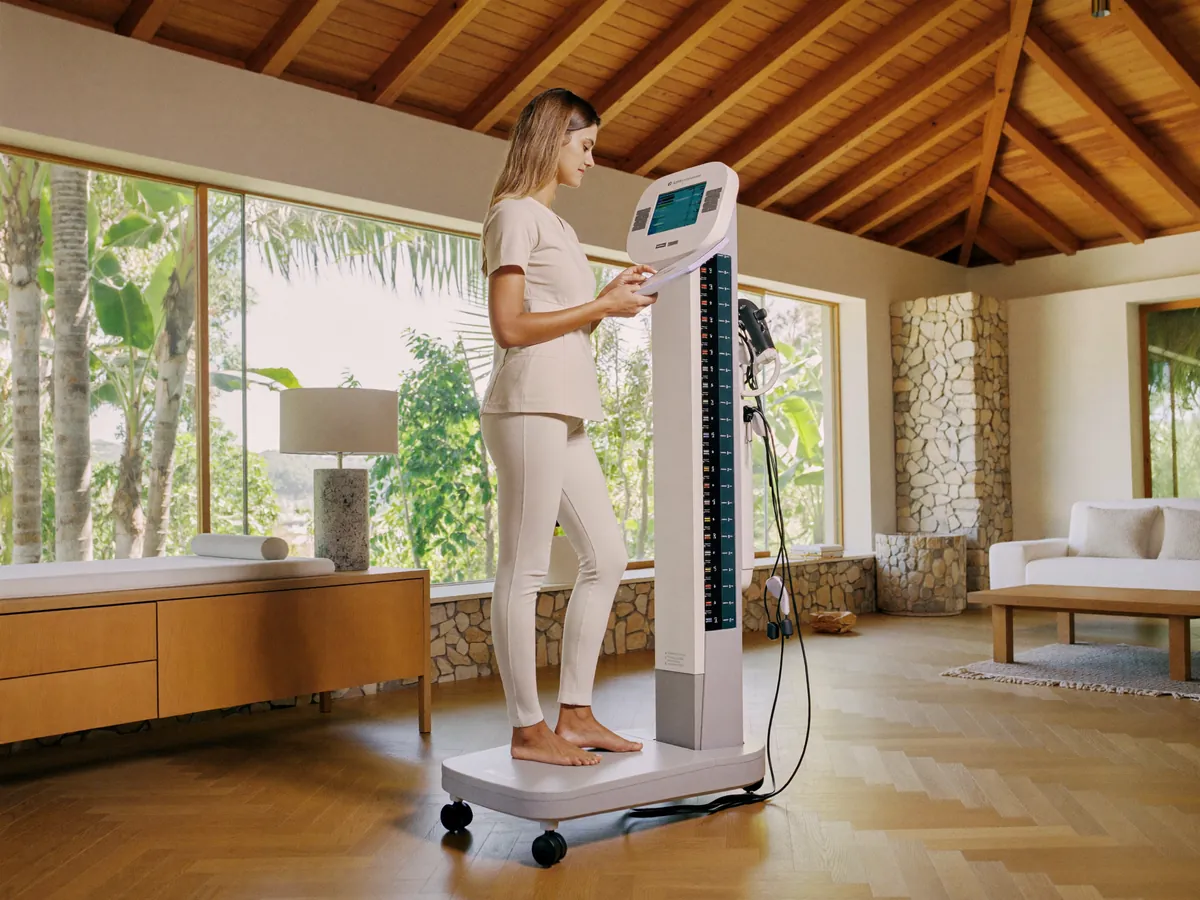
Body composition analysis is the most common first purchase across the 100+ equipment projects our supply desk has delivered for gyms, clinics and longevity studios in Indonesia over the past three years. The reason is simple: a gym owner in Seminyak who installed one last year told us the unit cleared its own cost inside its first year, purely from IDR 250,000 re-test fees and the personal-training packages that follow almost every printed report. But the category is confusing from the outside. Prices run from $22,500 to $90,000, spec sheets throw around frequencies and compartment models, and distributors rarely explain what actually matters. This guide walks through the physics, the four analyzers we install most often, honest price ranges in USD and IDR, and exactly which unit fits which business.
How professional BIA actually works
Bioelectrical impedance analysis (BIA) passes a tiny, imperceptible alternating current through the body via eight tactile electrodes — two per hand, two per foot. Lean tissue is roughly 73 percent water and rich in electrolytes, so it conducts well; fat tissue resists. By measuring impedance segmentally — left arm, right arm, trunk, left leg, right leg — a professional device maps where muscle and fat actually sit, instead of averaging the whole body into one number the way bathroom scales do.
Frequency is the spec that separates professional units from consumer toys. Low frequencies around 1–5 kHz cannot cross cell membranes, so the current travels through extracellular water only. High frequencies — 250 kHz up to 3 MHz on the InBody 970 body composition analyzer — penetrate the membrane and capture intracellular water as well. Comparing the two lets a multi-frequency device separate extracellular from intracellular water, which is how you distinguish genuine muscle gain from fluid retention. It is also why the ECW/TBW ratio has become a favourite inflammation and oedema flag among the longevity physicians we supply in Jakarta and Ubud.
The other number clinical buyers keep asking about in 2026 is phase angle: the time delay the 50 kHz signal accumulates as it crosses billions of cell membranes. Healthy, intact membranes delay the signal more. Low phase angle tracks with sarcopenia, malnutrition and frailty across a large body of published research, which makes it a compelling single metric for longevity programs — and a genuine reason to buy a research-grade analyzer rather than a cheap import.
Air displacement: the BOD POD route
The BOD POD GS-X air displacement plethysmograph takes a completely different physical route. It measures body volume by tracking pressure changes between two chambers of a sealed capsule, then computes body density (mass divided by volume) and converts density to fat percentage through a two-compartment model. Because it measures a physical property directly rather than predicting from population equations, it is hydration-independent and is the method many university labs and elite sport combines rely on. The trade-offs: a ten-minute appointment with a swim-cap-and-compression-wear protocol, a bigger footprint, and a ~$75,000 (≈IDR 1.2 miliar) landed budget.
What about DEXA?
DEXA scanners are excellent instruments, but in Indonesia they are X-ray devices: BAPETEN radiation permits, a shielded room and a licensed radiographer come with the purchase. That is a different operational animal from anything in this guide, and we broke the decision down in detail in our InBody vs DEXA comparison. The short version: fewer than one in ten wellness businesses should choose the X-ray route.
The four analyzers we install most, compared
These are the units that actually leave our Denpasar and Jakarta warehouses, with the indicative landed-and-installed pricing clients pay:
| Model | Technology | Test time | Price (USD / IDR) | Throughput | Footprint | Best fit |
|---|---|---|---|---|---|---|
| InBody 970 | Multi-frequency segmental BIA, 1 kHz–3 MHz, phase angle | Under a minute on the platform | ~$90,000 / ≈IDR 1.45 miliar | 12–15 tests/hour | 0.9 × 1.0 m | Flagship gyms, longevity clinics |
| seca mBCA 555 | Medical-grade 8-electrode BIA, validated against four-compartment reference | About 30 seconds | ~$60,000 / ≈IDR 960 juta | 12–15 tests/hour | 0.9 × 1.0 m | Medical clinics, hospital check-up units |
| ACCUNIQ BC730 | Multi-frequency segmental BIA | Roughly a minute | ~$22,500 / ≈IDR 360 juta | 10–12 tests/hour | 0.8 × 0.9 m | Boutique gyms, studios, first analyzer |
| BOD POD GS-X | Air displacement plethysmography | 10-minute appointment | ~$75,000 / ≈IDR 1.2 miliar | 4–5 tests/hour | Approx. 2.5 m² plus clearance | Research labs, sports academies, flagship longevity centres |
Treat the ~ figures as indicative: the final price of each unit is confirmed by our supply manager at order time, since it shifts with the exchange rate, the freight method and the delivery route.
Which analyzer to choose if…
- You run a boutique gym or pilates studio in Canggu or Bandung and the budget stops at $25,000: the ACCUNIQ BC730 gives you segmental multi-frequency results and a clean report for a fraction of the price of the market leader.
- You are building a flagship gym, biohacking studio or longevity clinic: the InBody 970 is the unit your members already recognise from social media, the report prints beautifully, and the cloud database plus member app makes re-testing a habit rather than a chore.
- You are a medical clinic or hospital executive check-up unit in Jakarta or Surabaya: the seca mBCA 555 carries a medical CE mark, was validated against four-compartment reference methods in peer-reviewed work, and slots into EMR workflows.
- You run a sports science faculty or athlete program in Yogyakarta: the BOD POD GS-X is the defensible reference method reviewers and federations will not argue with.
- You sell weight-loss programs: pair any BIA unit with metabolic testing — we covered the combination in our metabolic testing for weight-loss programs guide.
What to charge and how fast it pays back
Across our client base the standalone body composition test sells for IDR 150,000–350,000 in gyms and IDR 350,000–500,000 inside clinic screening packages. Take a conservative middle case: an InBody 970 landed in Bali at roughly IDR 1.45 miliar, eight paid tests a day at an average IDR 250,000, twenty-six operating days a month. That is IDR 52 juta of monthly test revenue and a payback window of roughly twenty-eight months — before counting the personal-training and program upsells that body composition reports reliably trigger. The ACCUNIQ at the same volume pays back in around seven months. This is why we call body composition the anchor tenant of any assessment lab.
One more revenue note: re-test cadence matters more than the first test. Facilities that book the next scan at checkout — every six to eight weeks — see three to five times the annual per-member testing revenue of facilities that wait for members to ask.
Talk to a supply manager on WhatsApp — send your floor plan and expected monthly test volume, and we will shortlist two or three units with landed Bali or Jakarta pricing within one working day.
Operational details buyers forget
- Placement: keep the unit away from pool decks and open-air humidity — in Bali builds we specify an air-conditioned assessment room. Standard 220 V power is enough; no special wiring.
- Protocol discipline: BIA readings move with hydration, meals, alcohol and training. Test members at consistent times, fasted or three hours post-meal, and results become beautifully repeatable.
- Consumables: electrode wipes and thermal paper are the only recurring costs — budget under IDR 1 juta per month at gym volumes.
- Regulatory: if the device will be used in a licensed medical facility, it needs Kemenkes AKL registration — every unit we import ships with the paperwork already handled, along with installation and staff training from our Bali warehouse team (priority delivery across the island, door-to-door across Indonesia).
Three mistakes we keep seeing
- Buying an unbranded analyzer with no validation studies to save $3,000, then discovering members do not trust — or share — the results.
- Hiding the analyzer in a back office. Put it beside reception with the report screen visible; it sells itself.
- Treating it as a standalone gadget instead of a program. The winners bundle testing into onboarding, challenge events and quarterly reviews — and pair it with posture data from a 3D body scanner for a complete visual story.
Browse the full body composition analyzer range for current stock, or see how assessment fits a bigger screening offer in our health screening package design guide. And if you want numbers for your specific site — Seminyak villa gym, Jakarta SCBD tower clinic or a Surabaya hospital wing — message our team on WhatsApp and we will build the comparison for you, with IDR pricing, lead times and installation included.
Pricing other equipment for the same facility? See the wellness equipment price list. Bahasa Indonesia: jual body composition analyzer untuk klinik dan gym.
The WellnessEquip Indonesia supply desk sources, imports and installs wellness equipment across Indonesia. Questions about your project? Message a supply manager on WhatsApp — honest answers, no hard sell.
— FAQ
Frequently asked questions
How accurate is a professional body composition analyzer compared to DEXA?
For fat-free mass, research-grade multi-frequency BIA correlates very strongly with DEXA at the group level (correlations around 0.94–0.98 in published comparisons). Individual readings can differ by two to four percentage points of body fat, mostly due to hydration. With a consistent test protocol, BIA tracks change over time extremely well, which is what gyms and longevity clinics actually need.
How much does a body composition analyzer cost in Indonesia?
Landed and installed, expect around $22,500 (≈IDR 360 juta) for an ACCUNIQ BC730, around $60,000 for a seca mBCA 555, around $75,000 for a BOD POD GS-X and around $90,000 for an InBody 970. All include delivery from our Denpasar or Jakarta warehouse.
Which body composition analyzer is best for a gym?
For boutique studios the ACCUNIQ BC730 covers segmental analysis at the lowest price. For flagship gyms and biohacking studios the InBody 970 wins on member recognition, report quality and its cloud app, which drives re-test bookings. Medical facilities usually choose the seca mBCA 555 for its clinical validation.
Do I need a Kemenkes AKL license to operate a BIA machine?
The AKL (izin edar alat kesehatan) attaches to the device being legally imported and distributed, and matters most if you operate as a licensed medical facility. As the importer of record we handle AKL registration and customs, so gyms, spas and clinics receive a unit that is already compliant.
— Keep reading
Related guides
Buyer Guides · 6 min read
InBody vs DEXA: Which Should a Clinic or Gym Buy?
Which body composition system should a clinic or gym buy? InBody vs DEXA on accuracy, BAPETEN licensing, cost per test and throughput — and when a BOD POD beats both.
Buyer Guides · 6 min read
3D Body Scanning for Gyms and Studios: Which Scanner to Buy
Members quit when they cannot see progress. We compare Fit3D, Styku, Formetric 4D and Kinetisense — scanning tech, accuracy, USD/IDR pricing and the retention math from gyms we have equipped across Indonesia.
Business · 6 min read
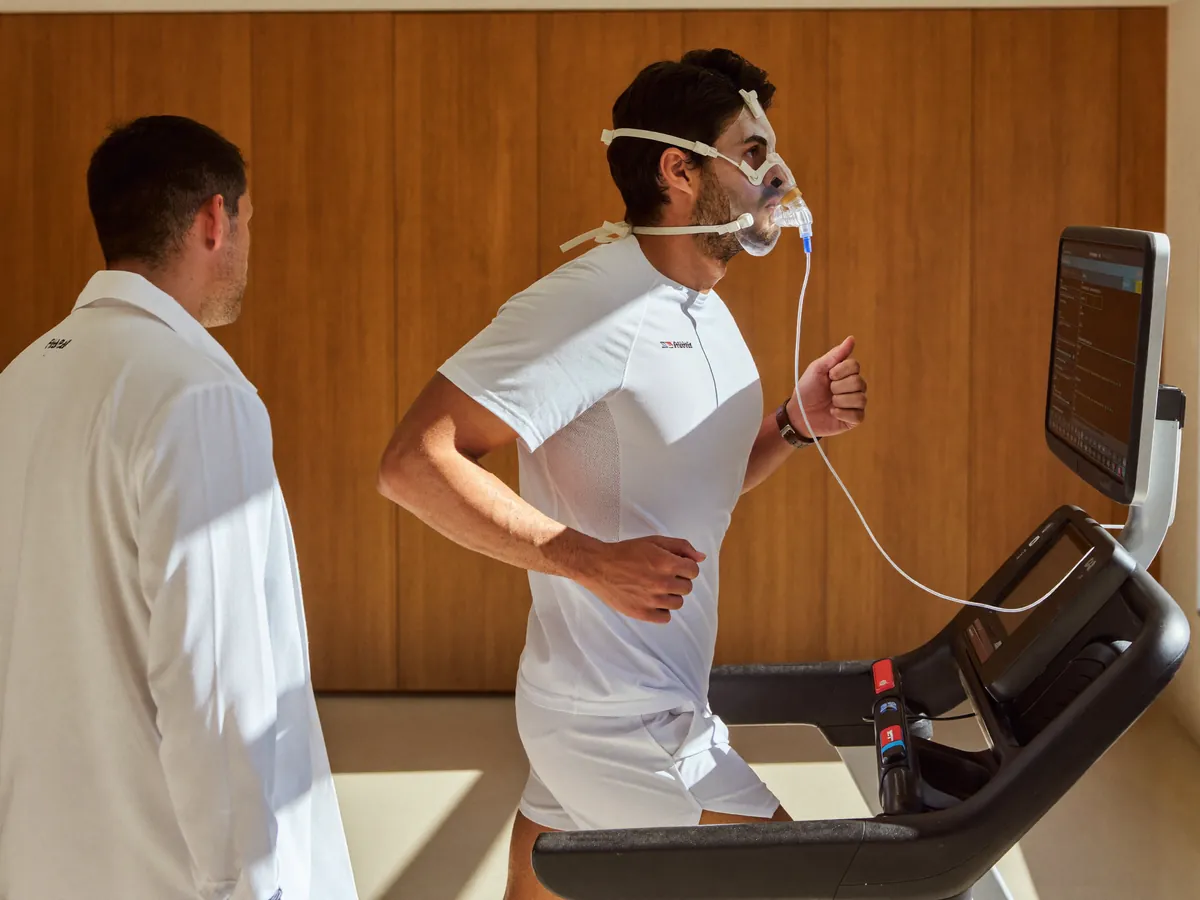
Metabolic Testing: The Missing Engine in Your Weight-Loss Program
Programs that measure RMR keep clients two to three times longer than programs that guess. Real equipment prices, 12-week program design and the ROI math for adding metabolic testing to weight-loss services in Indonesia.