Recovery · · 7 min read
Why Hotels Are Adding Recovery Rooms — and What They Actually Earn
Updated August 12, 2026 · by the WellnessEquip Indonesia supply desk
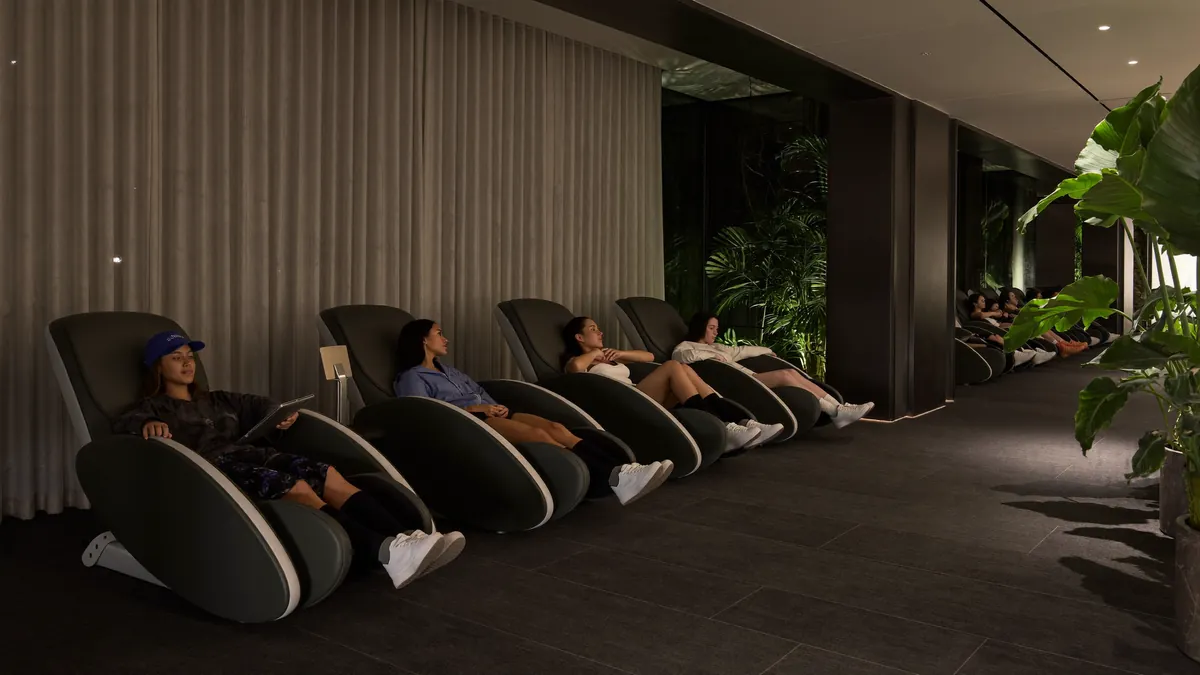
In the past eighteen months our supply desk has quoted more hotel recovery rooms than in the previous five years combined. The call usually starts the same way — a general manager, most recently from a 90-key clifftop resort in Uluwatu, says some version of: “guests keep asking where the ice bath is.” A gym and a pool no longer differentiate a property; in 2026, a recovery room is becoming the amenity that shows up in booking decisions, TripAdvisor reviews and rate justifications. Having equipped recovery spaces for hotels, villas and resorts across Bali and Jakarta, here is WellnessEquip Indonesia's honest field guide: what goes in, what it costs, and the math that convinces owners.
Why this trend has legs
Three forces stack up. First, the demand data: the Global Wellness Institute values the wellness economy at roughly $6.3 trillion and growing near 8% annually, with wellness tourism expanding faster than tourism overall — and wellness-motivated travelers consistently outspend average visitors per trip. Bali's post-pandemic arrivals recovered above six million foreign visitors a year, and a visible share of them now travel with recovery habits: sauna, cold immersion, sleep optimization, training holidays. We covered the market side in depth in our wellness tourism in Bali market report.
Second, competitive parity. Every four-star property already lists “fitness center, pool, spa.” A recovery room is still a differentiator — for perhaps another two seasons, judging by the quoting volume we see from Seminyak to Nusa Dua.
Third, the economics. Unlike a spa, a recovery room is largely self-service: no therapist hours per guest, one attendant per shift, and equipment that works while staff watch the towels. Margin per square meter beats almost anything else on the amenity floor except the bar.
What actually goes into a hotel recovery room
The builds we deliver cluster into four zones:
- Thermal: a compact sauna (Finnish or infrared) and a chiller-driven cold plunge holding 6–10°C in tropical ambient. This pair is the heart of the room — the full hot-cold logic is in our contrast therapy circuit guide.
- Circulation: pneumatic compression boots (two to four stations) for post-flight legs and post-surf recovery — the single most photographed item in every install; we stock the Normatec 3 at ~$2,700 per station, the unit guests ask for by name.
- Light and sleep: red light therapy panels — a compact Joovv Solo (~$4,000) covers a single station — used heavily by jet-lagged arrivals from Europe and Australia, with the HigherDOSE PEMF mat (~$3,200) an increasingly requested add-on for the wind-down corner.
- Measurement: the corner that separates a serious recovery room from a decorated gym annex — body composition, 3D scanning and HRV, covered below.
Destination-tier properties increasingly ask about a fifth element, flotation — a DreamPod float pod runs ~$31,000 in its V2 version — and the whitespace argument is hard to ignore: Jakarta still has no dedicated float studio while Bali already supports four.
Three budget tiers, real numbers
| Tier | Footprint | Typical contents | Budget (USD) | Budget (IDR) |
|---|---|---|---|---|
| Compact | 20–30 m² | Infrared sauna, cold plunge, 2 compression stations, red light panel | $30,000–60,000 | Rp 480–960 million |
| Signature | 50–80 m² | Finnish sauna, 2 plunges, 4 compression stations, red light room, measurement corner | $145,000–210,000 | Rp 2.3–3.4 billion |
| Destination | 120 m²+ | Full thermal suite, recovery lounge, assessment room, programming staff | $260,000–470,000 | Rp 4.2–7.5 billion |
Tier budgets are indicative landed figures — the final price is confirmed by a supply manager, because it moves with the exchange rate, the freight method and the delivery route. Tropical engineering caveats apply at every tier: chillers sized at roughly one horsepower per 400–500 liters for Indonesian ambient, thermo-treated sauna timber with designed ventilation, drainage and slip-rated floors, and RCD-protected electrical everywhere near water. Budget 10–15% of capex for fit-out corrections in older buildings — we have yet to meet a 2010s-era Bali plant room that was ready as found.
How hotels make the money back
- In-stay day passes. Rp 350,000–750,000 ($22–47) for recovery room access — the workhorse. Attach rates at properties we supply run 8–15% of occupied rooms once the room is marketed at booking and check-in, not hidden on a spa menu.
- Stay packages. “Surf and recover” or “train and travel” bundles carrying a 10–20% ADR premium; the recovery room is the credibility anchor that lets revenue managers defend the rate.
- Local memberships. Non-guest members at Rp 1.5–3 million a month fill weekday mornings — particularly powerful in residential-adjacent locations like Sanur, Seminyak and Jakarta's Kemang.
- Group and MICE add-ons. Corporate retreats in Nusa Dua increasingly request recovery blocks as part of the program; per-delegate pricing at Rp 250,000–400,000 adds up fast at 60 delegates.
- Assessment upsells. Paid testing packages from the measurement corner, Rp 500,000–1.5 million per guest — detailed below.
The worked example: 120-key resort
Take a 120-key property at 65% annual occupancy — 78 occupied rooms, call it 140 in-house guests a night. A 12% day-pass attach at an average Rp 500,000 yields roughly Rp 8.4 million a day, or about Rp 250 million ($15,600) a month. Add 40 local members at Rp 2 million (Rp 80 million) and modest assessment revenue (Rp 25–40 million), and the room grosses around Rp 355–370 million ($22,000–23,000) monthly. Against Rp 60–90 million of operating cost — one attendant per shift, energy for chillers and sauna at commercial tariffs, laundry, consumables, maintenance reserves — net contribution lands near Rp 270–300 million a month. A signature-tier build at Rp 2.3–3.4 billion pays back in roughly 8–12 months, before counting the ADR halo. Even cutting every assumption in half leaves payback under two years, which is why owners who run this math tend to call back. The fuller framework — including how wellness amenities move ADR and direct bookings — is in our guide to how wellness equipment increases hotel revenue.
Want this model run on your property's numbers? Message a supply manager on WhatsApp — send keys, occupancy and available floor area, and we will return a tiered equipment plan with landed pricing, free.
The measurement corner: where guests become repeat guests
Recovery rooms without measurement feel like nice bathrooms; recovery rooms with measurement create programs. The stack we install most: an InBody 970 body composition analyzer for a 45-second arrival scan that anchors a guest's stay goals; a Fit3D ProScanner 3D body scanner whose visual avatar makes multi-week retreat progress undeniable; and Firstbeat Life HRV monitoring for jet-lag and recovery programming that gives your wellness staff a professional edge over any competitor still guessing. Sold as arrival-and-departure assessment packages at Rp 500,000–1.5 million, these devices typically recover their cost across the first two high seasons, before counting the rate premium they help justify — and browse the wider body composition analyzer category for options at every price point.
Staffing and upkeep in a tropical climate
The operating model is deliberately lean, but it is not zero. One cross-trained attendant per shift — usually shared with the gym or pool team — runs a daily checklist: water temperature logged at open and close, sanitizer reading, towel counts, wipe-downs between guests, and a five-minute walk-through of compression sleeves and light panels. The technical side belongs on a monthly preventive contract: chiller coils and refrigerant pressure, sauna heater elements, plunge filtration, valve checks on compression stations. Budget Rp 5–8 million ($310–500) a month for that contract and treat it as insurance — an unplanned chiller failure in high season costs multiples of a year's maintenance in refunds and apology credits. Beachfront properties from Seminyak to Lombok should also specify marine-grade fittings up front; salt air finds every cheap hinge and connector within a year, and the retrofit always costs more than the original upgrade would have.
Mistakes we keep seeing
- Hiding the recovery room on the spa menu instead of selling it at booking, check-in and in the room QR — attach rates triple when marketing moves upstream.
- Undersized chillers specified from temperate-climate catalogs; the plunge reads 14°C by 3 pm and the reviews mention it.
- No measurement corner — the room becomes a photo stop instead of a program, and repeat usage collapses after day two.
- Treating it as a cost center in the P&L. Give the room its own revenue line and a manager who owns the attach rate.
Where to start
Start compact, in a space guests already pass, with the thermal pair plus compression plus one measurement device — then expand when the attach rate proves itself. WellnessEquip Indonesia sources the full stack — saunas from Finland, plunges and chillers rated for tropical ambient, compression, red light and diagnostics from the USA, Korea and Germany — handles import paperwork including Kemenkes AKL where applicable, and delivers door-to-door from Denpasar and Jakarta warehouses: delivery windows confirmed with your quote across Bali, including delivery and installation in Uluwatu, with scheduled freight to Lombok, Surabaya and Jakarta. Talk to a supply manager on WhatsApp and get a recovery room plan matched to your property tier.
The WellnessEquip Indonesia supply desk sources, imports and installs wellness equipment across Indonesia. Questions about your project? Message a supply manager on WhatsApp — honest answers, no hard sell.
— FAQ
Frequently asked questions
What is a hotel recovery room?
A self-service wellness amenity combining thermal contrast (sauna and cold plunge), pneumatic compression, red light therapy and a measurement corner with body composition and HRV devices. Unlike a spa it needs no therapist hours per guest — one attendant per shift supervises the whole space.
How much does a hotel recovery room cost?
Compact 20–30 m² rooms run $30,000–60,000 (Rp 480–960 million); signature 50–80 m² builds with a full measurement corner run $145,000–210,000 (Rp 2.3–3.4 billion); destination suites exceed $260,000. Add 10–15% for fit-out corrections in older Indonesian buildings.
Do hotel recovery rooms actually generate revenue?
Yes — through day passes (Rp 350,000–750,000 with 8–15% attach rates), local memberships, MICE add-ons and paid assessments. A 120-key resort at 65% occupancy typically nets Rp 270–300 million a month, putting payback on a signature build at roughly 8–12 months before any ADR uplift.
What equipment should a hotel recovery room have first?
Start with the thermal pair — a sauna and a properly chilled 6–10°C plunge — plus two compression stations and one measurement device such as an InBody 970. That compact stack fits 20–30 m², costs from about $110,000, and covers the use cases guests actually book: jet lag, training recovery and heat-cold contrast.
— Keep reading
Related guides
Business · 6 min read
How Wellness Equipment Increases Hotel Revenue: The Real ROI Math
A correctly sized hotel wellness setup pays back in 6–14 months. We break down equipment tiers, session pricing, ADR uplift and a full worked example for a 60-room Seminyak property.

Recovery · 7 min read
Spa Contrast Circuit: Equipment, Budgets and Session Pricing
Heat plus cold outsells either alone — in every project we have supplied. Circuit layouts by floor area, protocols in °C, budgets in USD and IDR, and the capacity math spas actually need.
Trends · 6 min read
Wellness Tourism in Bali: The 2026 Market in Numbers
Six million foreign arrivals, a 40% wellness spending premium and five distinct sub-markets from Ubud to Sanur. A supply-side breakdown of Bali's wellness tourism economy — with the service prices and equipment budgets that make it work.