Trends · · 7 min read
Wellness Industry Trends 2026: The Equipment Behind the Boom
Updated August 12, 2026 · by the WellnessEquip Indonesia supply desk
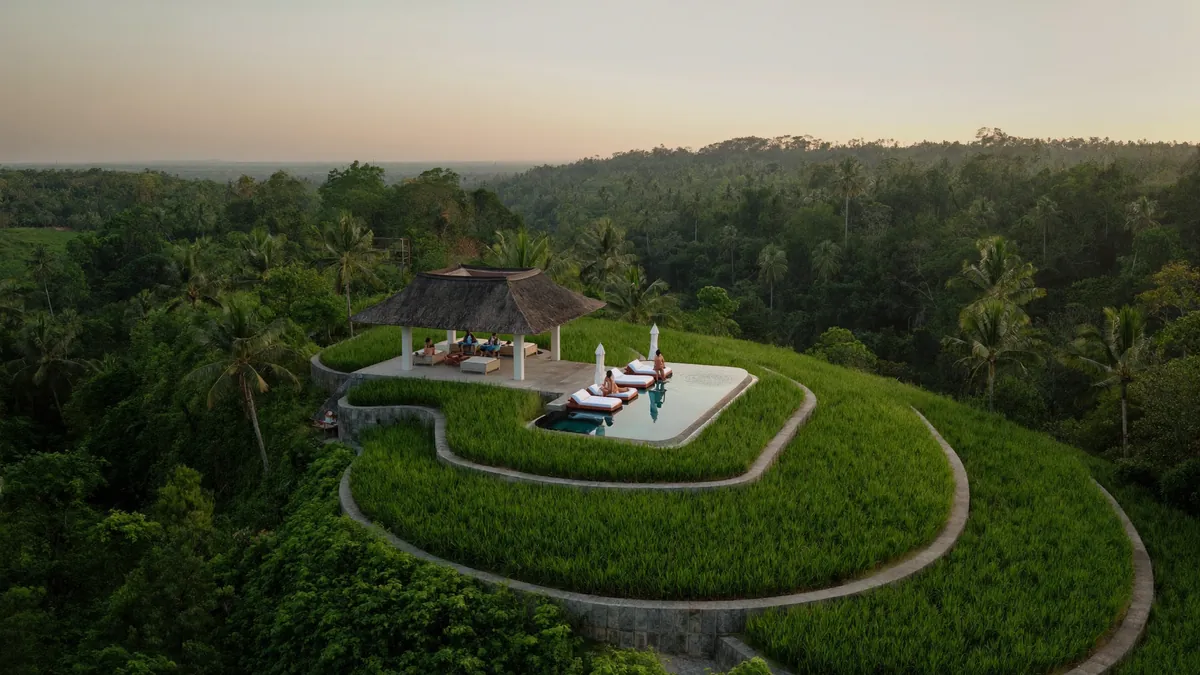
Every January our supply desk in Denpasar fields the same question from investors: what should we build this year? In 2026 the answer is easier to give than ever, because the market data and our own order book finally point in the same direction. Over the past three years we have delivered 100+ equipment projects for clinics, gyms, hotels and retreats across Indonesia, and the pattern inside those purchase orders says more about wellness industry trends 2026 than any conference keynote. Below are the five trends we actually see money moving into, with real budgets in USD and IDR, and the reasons Indonesia — Bali and Jakarta above all — has become the market every operator in Asia is watching.
The numbers behind the boom
The Global Wellness Institute estimates the global wellness economy at roughly $6.3 trillion, growing around 8% per year — comfortably faster than global GDP. Inside that total, wellness tourism and wellness real estate are the fastest-growing segments, both compounding at double-digit rates. Asia-Pacific is the engine: rising middle-class incomes, established medical tourism corridors and a durable post-pandemic shift toward measurable, data-backed health.
Indonesia sits at the intersection of all three forces. The country has a population of 270+ million, a domestic upper-middle class that has historically flown to Singapore or Bangkok for executive check-ups, and in Bali an international visitor base that has recovered to roughly six million foreign arrivals a year and keeps climbing. When one market carries both domestic and tourist demand for the same wellness services, operators run their equipment at utilization rates European clinics only dream about. That is the core reason our container volume from Korea, Germany and the USA has roughly doubled since 2024.
Trend 1: Diagnostics-first wellness
The era of take-my-word-for-it programming is over. Members of boutique gyms in Seminyak and patients of executive clinics in Jakarta SCBD now expect a baseline scan before they commit a single rupiah to a program. Body composition analysis is the entry point: a professional station built around the InBody 970 body composition analyzer costs ~$90,000 (roughly Rp 1.45 billion landed) and pays for itself in about 30 months at 25 scans a week priced at Rp 350,000–500,000 each — faster where scans anchor paid programs and memberships.
The step beyond body composition is metabolic testing. Resting metabolic rate and VO2 max used to be hospital laboratory services; today a PNOE VO2 max analyzer at ~$24,000 turns any fitness studio into a legitimate testing facility. We installed three of them in Canggu alone during 2025, and each books out two to three weeks ahead through high season.
Trend 2: Longevity goes mainstream
Five years ago a longevity clinic meant a niche practice in Switzerland or California. In 2026 it is a mainstream business model, and Indonesia is riding the wave: by our count at least a dozen longevity-branded projects opened or broke ground across Ubud, Uluwatu and Jakarta in the past 18 months. The equipment stack is what separates a credible longevity clinic from a rebranded spa — biological age testing, oxidative stress panels, arterial stiffness measurement and HRV assessment.
Entry no longer requires hospital-scale procurement. An AGE Reader mu biological age scanner runs ~$45,000 (≈Rp 720 million), takes a non-invasive reading in about 12 seconds, and hands the clinic the single most shareable metric in wellness: your biological age. Pair it with oxidative stress and arterial screening from our longevity biomarker equipment range and you have a defensible testing menu for under $90,000 all-in. We unpack the clinical and commercial model in our article on the longevity medicine trend.
Trend 3: Recovery becomes standard infrastructure
Cold plunge, sauna, compression and red light have moved from biohacker garages into hotels, gyms and even office towers. In Bali the driver is tourism: a guest paying $30–50 for a contrast therapy session expects professional-grade equipment, not a chest freezer with a pool pump. In Jakarta the driver is corporate: HR teams in Sudirman towers now block-book recovery sessions the way they booked massage chairs in 2020.
Recovery hardware is consistently the fastest category in our catalog to reach payback — typically 8–14 months at Bali session pricing. A client in Canggu recently replaced two DIY chest-freezer plunges with commercial chillers after burning through compressors in four months; at 25+ sessions a day, professional equipment wins on electricity, water hygiene and downtime alone. The lesson repeats across every recovery install we have done from Seminyak to Sanur: buy for the throughput you want in month twelve, not month one.
Trend 4: Wellness real estate and hotel wellness
Developers have discovered that wellness adds a measurable premium to nightly rates and villa prices. The Global Wellness Institute tracks wellness real estate growing at 15%+ per year — the fastest line in the entire wellness economy — and you can see it on the ground from Uluwatu clifftop projects to Lombok eco-resorts: gym-plus-spa is no longer enough. The new baseline is a diagnostics corner, a recovery circuit and programming built on guest data. Hotels that add measurable wellness services report higher average daily rates and longer stays; we walk through that arithmetic in how wellness equipment increases hotel revenue.
Trend 5: Medical fitness
The wall between healthcare and fitness is collapsing from both sides. Gyms are adding clinical-grade testing; clinics are adding supervised exercise programming; insurers in Indonesia have started piloting premium discounts tied to verified health metrics. All of it converges on the same hardware: body composition, cardiovascular screening and metabolic carts. If you operate a gym, this is the most profitable trend on this list to act on — our breakdown of the medical fitness trend includes program pricing that works in Indonesian markets.
What each trend costs to enter
| Trend | Core equipment | Entry budget (USD) | Entry budget (IDR) | Typical payback |
|---|---|---|---|---|
| Diagnostics-first | Body composition station | $22,500–60,000 | Rp 360–960 million | 14–22 months |
| Longevity testing | Biological age, oxidative stress, arterial screening | $45,000–85,000 | Rp 720 million–1.35 billion | 16–26 months |
| Recovery zone | Cold plunge, sauna, HRV monitoring | $25,000–55,000 | Rp 400–880 million | 9–15 months |
| Hotel wellness | Testing corner plus recovery circuit | $60,000–170,000 | Rp 960 million–2.7 billion | 16–26 months |
| Medical fitness | Metabolic cart plus body composition | $40,000–150,000 | Rp 640 million–2.4 billion | 14–22 months |
These are indicative landed budgets based on orders we delivered between 2024 and 2026. The final price is confirmed by a supply manager, because it moves with the exchange rate, the freight method and the delivery route — which is why we only fix numbers in a written quote.
Planning a 2026 opening? Send us your concept and floor area and we will return a costed equipment list within 48 hours — talk to a supply manager on WhatsApp.
Why Indonesia is the 2026 hotspot
We ship across Southeast Asia, and nothing currently matches Indonesia's momentum. Three structural reasons stand out.
- Bali's wellness tourism flywheel. Visitors arrive pre-sold on wellness; the only question is where they spend. Retreats in Ubud, fitness studios in Canggu and clifftop resorts in Uluwatu compete on measurable offerings, which drives a continuous equipment upgrade cycle. The spend-per-visitor data is in our wellness tourism Bali market report.
- Jakarta's corporate and clinical demand. A metro region of 30+ million people where executive health check-up packages sell at Rp 3–15 million and screening clinics in Menteng and Kemang expand floor by floor. Corporate wellness budgets grew visibly through every quarter of 2025.
- Import logistics have matured. What took 12–16 weeks door-to-door in 2022 now takes 6–10 weeks with AKL registration prepared upfront. We hold fast-moving units in Denpasar and Jakarta warehouses, with priority delivery across Bali and Java — details on our Bali coverage page and Jakarta coverage page.
What we would buy first in 2026
If we were opening a wellness business in Indonesia this year on a limited budget, the purchase order would read, in this sequence: first, a body composition analyzer, because it monetizes from day one and feeds every other service; second, a recovery circuit, because it creates the recurring visits that smooth cash flow; third, a biological age device, because it differentiates the brand and justifies premium pricing. Leave the exotic toys until those three are earning. And before wiring a deposit to any overseas factory, understand import duty and AKL registration — or work with a supplier who carries both for you.
Everything referenced above is in our wellness equipment catalog, filterable by category and budget.
The 2026 window is open, but prime sites in Seminyak, Canggu and SCBD are being locked up quarter by quarter. If you want a costed, phased equipment plan for your project, message our supply desk on WhatsApp — we answer the same business day.
The WellnessEquip Indonesia supply desk sources, imports and installs wellness equipment across Indonesia. Questions about your project? Message a supply manager on WhatsApp — honest answers, no hard sell.
— FAQ
Frequently asked questions
How big is the wellness industry in 2026?
The Global Wellness Institute valued the global wellness economy at about $6.3 trillion in 2023, growing roughly 8% per year. At that pace the market passes $7.5–8 trillion around 2026–2027. Wellness tourism and wellness real estate are the fastest-growing segments — exactly where Indonesia is strongest.
Which wellness industry trend is most profitable in Indonesia?
Recovery zones and diagnostics stations reach payback fastest in our client base, typically 9–20 months. Recovery wins on recurring visits, while diagnostics wins on margin per session and upsell into programs. Longevity testing takes longer to pay back but supports much higher ticket prices.
How much does it cost to enter the wellness business in Bali?
Realistic entry starts around $15,000–22,500 (Rp 240–360 million) for a single diagnostics station inside an existing gym or spa. A standalone recovery-plus-testing concept lands at $55,000–95,000, and a full longevity clinic starts near $150,000. Equipment is usually 30–40% of total project capex.
Do I need licenses to operate wellness equipment in Indonesia?
Devices classified as medical require AKL registration with the Ministry of Health (Kemenkes), and some services require clinical staff on site. Non-medical wellness hardware such as saunas or cold plunges does not. We confirm the regulatory status of every device before you order and supply units with existing AKL wherever possible.
— Keep reading
Related guides
Trends · 6 min read
Wellness Tourism in Bali: The 2026 Market in Numbers
Six million foreign arrivals, a 40% wellness spending premium and five distinct sub-markets from Ubud to Sanur. A supply-side breakdown of Bali's wellness tourism economy — with the service prices and equipment budgets that make it work.
Trends · 6 min read
The Longevity Medicine Trend: How Living Longer Became a Business
Longevity medicine turned measurement into a business model: test, intervene, re-test. What clinics actually measure, the equipment stack at three budget tiers, and who is opening longevity practices across Bali and Jakarta.
Trends · 6 min read
The Medical Fitness Trend: Turning Gyms Into Health Providers
Gyms are adding clinical-grade testing and clinics are adding supervised training — and both are buying the same equipment. What medical fitness means, why Indonesia is ready, the service stack with real IDR pricing, and a 90-day rollout plan.