Trends · · 6 min read
Health Tech Equipment List for Wellness Residences and Villas
Updated August 12, 2026 · by the WellnessEquip Indonesia supply desk
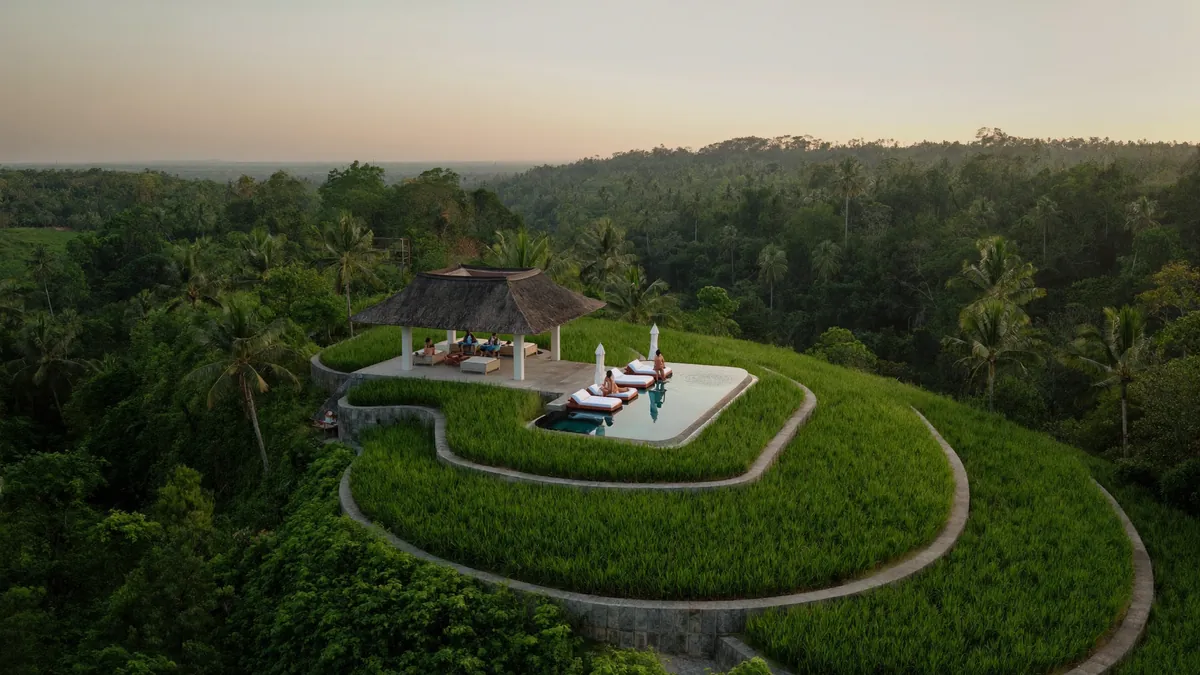
The message that changed our view of 2026 arrived on a Tuesday: a developer sent our supply desk a floor plan for twelve clifftop villas in Uluwatu with a one-line question — what goes in the wellness building? Not whether to build one; what goes inside. Five years ago wellness real estate meant a yoga shala and a nice pool. Today developers from Canggu to Lombok treat health infrastructure the way they treat kitchens: a standard system that must be specified, costed and serviced. Having supplied equipment to villa complexes, branded residences and resort clinics across Indonesia, here is the health tech equipment list we specify for wellness residences — by tier, with indicative prices and the build notes that keep it running. Architecture and construction of the wellness building sit with your design-build team; this guide covers the equipment.
What health tech a wellness residence needs
The Global Wellness Institute defines wellness real estate as homes and communities intentionally built for occupant health, and tracks it around $400 billion globally, growing at 15%+ per year — the fastest segment in the entire $6.3 trillion wellness economy and roughly double the growth rate of construction overall. The category spans passive design (air, water, light, acoustics) and active infrastructure: gyms, spas, recovery suites and, increasingly, diagnostics. The frontier moved from build healthy walls to install measurable health services — and that second wave is where equipment suppliers like us suddenly find ourselves in developer meetings, because a diagnostics corner changes a sales brochure more than another infinity pool.
Why developers ask for an equipment list
Wellness features are one of the few amenities that still move price in a crowded villa market, and buyers of $500,000+ villas around Uluwatu and Pererenan now ask about recovery rooms, air and water systems at first viewing. That is why the conversation reaches an equipment supplier: the brochure needs a specification, a budget and a service plan — not just a render of a spa room.
Three tiers of wellness build-outs
Nearly every project we quote lands in one of three tiers.
| Tier | What is installed | Capex (USD) | Capex (IDR) | Typical project |
|---|---|---|---|---|
| In-villa kit | Sauna, cold plunge, compact gym, air and water filtration | $15,000–40,000 per villa | Rp 240–640 million | Rental villas, private homes |
| Clubhouse hub | Shared gym, recovery circuit, diagnostics corner | $60,000–120,000 | Rp 960 million–1.9 billion | Villa complexes, residences |
| Resort health suite | Clubhouse tier plus longevity testing and clinical services | $150,000–350,000 | Rp 2.4–5.6 billion | Resorts, branded estates |
Capex figures are indicative landed estimates — the final price of any configuration is confirmed by a supply manager, since it moves with the exchange rate, the freight method and the delivery route. The clubhouse tier is where diagnostics enter. A shared hub for 10–30 residences typically carries a Fit3D ProScanner 3D body scanner (~$30,000) so residents and guests track results from the on-site trainers, and a Firstbeat Life HRV monitoring system (~$11,500 per year with subscriptions) that lets the operator run stress-and-recovery programming as a paid service. Resort-tier projects add a longevity room — biological age, arterial screening, metabolic testing — pulled from our longevity biomarker range and cardiovascular health catalog, which turns the wellness center from a cost center into a revenue line with 80%+ testing margins.
If you are speccing a project now, send the floor plan and target guest profile — talk to a supply manager on WhatsApp and we will return tiered equipment options with landed pricing within 48 hours.
The equipment list by tier
| Tier | Equipment we specify | Indicative landed price per item |
|---|---|---|
| In-villa kit | Sun Home Equinox or Clearlight Sanctuary 2 infrared sauna; Plunge All-In or Ice Barrel 500 cold plunge; Normatec 3 boots; PlatinumLED BioMax 600 panel | ~$16,000 / ~$20,500; ~$23,000 / ~$4,100; ~$2,700; ~$2,500 |
| Clubhouse hub | Fit3D ProScanner, ACCUNIQ BC730 body composition, Firstbeat Life HRV, Plunge Evolve XL, Joovv Elite 3.0 | ~$30,000; ~$22,500; ~$11,500 / year; ~$21,000; ~$19,000 |
| Resort health suite | AGE Reader mu biological age, SphygmoCor XCEL arterial stiffness, COSMED Q-NRG metabolic cart, OBSERV 520x skin analysis | ~$45,000; ~$37,500; ~$60,000; ~$22,500 |
Prices are indicative landed figures from each product page and are confirmed by a supply manager for your order. For every category side by side, see the wellness equipment price list.
Where it is happening in Indonesia
The map of active wellness real estate projects tracks the tourism money. Uluwatu and the Bukit lead on clifftop resort-residences with full health suites. The Canggu–Pererenan corridor is the volume market: dozens of 6–20 villa complexes competing for the same digital-nomad and family buyers, where a clubhouse hub is becoming the differentiator. Ubud jungle estates sell longevity retreat adjacency. Lombok's Mandalika zone is drawing the next wave of resort capital looking for a reason to stand out against Bali. Nusa Dua's established resorts are retrofitting recovery suites rather than building new. And in Jakarta, premium towers in SCBD and PIK now market wellness floors — gym, recovery, screening room — as standard spec for corporate tenants. Delivery-wise we cover all of it from Denpasar and Jakarta warehouses; see the Uluwatu page and Lombok page for area logistics.
The operator angle: wellness that pays rent
Developers build the shell; operators make it earn. The pattern that works in Bali: the wellness hub runs as a paid service layer — testing on arrival, recovery sessions, programming — rather than a free amenity. A villa complex clubhouse doing 15 recovery sessions and 5 scans a day at typical Canggu pricing grosses $3,500–5,000 a month, which services the equipment loan and then some. Hotels run the same play at larger scale: our article on how wellness equipment increases hotel revenue walks the full P&L, and the hotel recovery room trend covers the amenity guests now expect at check-in. The resale story compounds it: a wellness hub with two years of service revenue history adds provable income to the asset, not just marketing gloss.
What buyers ask for in 2026
Four requests dominate developer briefs this year. Measurable services, not just space — testing rooms specified alongside saunas. Compact footprints — equipment that fits a 25–40 square meter room, because land is the expensive input. Service contracts — developers have learned that unserviced equipment dies in tropical conditions and takes the premium story with it. And brand-agnostic specification — buyers want Korean, German, American and vetted Chinese options quoted side by side with honest trade-offs, which happens to be exactly how we structure quotes.
Five questions we ask before quoting a development
Equipment lists mean nothing without context, so every developer conversation starts with the same five questions. Who operates the wellness hub after handover — the developer's own team, a villa management company or a third-party operator — because the answer decides how robust and automated the equipment must be. What is the guest or buyer profile — families in Pererenan need different kit than executives on the Bukit. Is the wellness offer free or paid — free amenities justify the in-villa tier, while paid services justify diagnostics and a booking system. What are the electrical and water constraints on site — a plunge chiller and a sauna together draw more than many villa circuits were designed for. And when is handover — because equipment ordered at the furnishing stage arrives after the marketing photos were supposed to feature it. Developers who can answer all five get a quote that survives contact with construction; the ones who cannot usually leave with a phasing plan instead, which is often the better outcome for the project.
Build notes from the supply side
Wellness real estate fails in the details, so we push developers to involve the equipment plan at design stage, not after handover. The recurring lessons: salt air within 500 meters of the coast corrodes standard equipment housings, so coastal projects in Uluwatu and Lombok need marine-grade specifications and covered installs. Saunas need ceiling height, dedicated electrical circuits and ventilation that architects rarely draw unprompted; cold plunge chillers need drainage and outdoor compressor space. Diagnostics rooms need stable power — a $500 voltage stabilizer protects a $30,000 scanner — and air conditioning that runs even when the villa is empty. Import lead times run 6–10 weeks including AKL registration for medical-class devices, so equipment orders belong in the construction schedule alongside pools and kitchens, not in the furnishing phase. We deliver and install across Bali from Denpasar stock on a confirmed schedule, with commissioning and staff training included.
The developers winning 2026 treat wellness infrastructure as core building systems with a revenue model attached. If your project is at concept or construction stage, message our supply desk on WhatsApp — we will spec a wellness package matched to your tier, timeline and coastal conditions.
The WellnessEquip Indonesia supply desk sources, imports and installs wellness equipment across Indonesia. Questions about your project? Message a supply manager on WhatsApp — honest answers, no hard sell.
— FAQ
Frequently asked questions
What health tech equipment does a wellness residence need?
Per villa: an infrared sauna, a chiller-driven cold plunge, compression boots and a red light panel. For a shared clubhouse: a 3D body scanner, a body composition analyzer and HRV monitoring. Resort health suites add biological-age, arterial and metabolic testing.
Do you design or build the wellness building?
No. We source, import, install and support the equipment and hand your architect and contractor its technical requirements — power, drainage, ventilation and room sizes. Design and construction stay with your design-build team.
What does a wellness villa or clubhouse cost to equip?
An in-villa kit — sauna, cold plunge, compact gym, filtration — runs $15,000–40,000 per villa. A shared clubhouse hub with a recovery circuit and diagnostics corner costs $60,000–120,000, and a resort-grade health suite with longevity testing reaches $150,000–350,000, or roughly Rp 2.4–5.6 billion landed in Indonesia.
Which Indonesian locations lead wellness real estate development?
Uluwatu and the Bukit lead on resort-residences, the Canggu–Pererenan corridor dominates villa-complex volume, Ubud sells retreat adjacency, and Lombok's Mandalika zone is attracting the next wave of resort capital. In Jakarta, premium towers in SCBD and PIK now market dedicated wellness floors to corporate tenants.
— Keep reading
Related guides
Business · 6 min read
How Wellness Equipment Increases Hotel Revenue: The Real ROI Math
A correctly sized hotel wellness setup pays back in 6–14 months. We break down equipment tiers, session pricing, ADR uplift and a full worked example for a 60-room Seminyak property.
Recovery · 7 min read
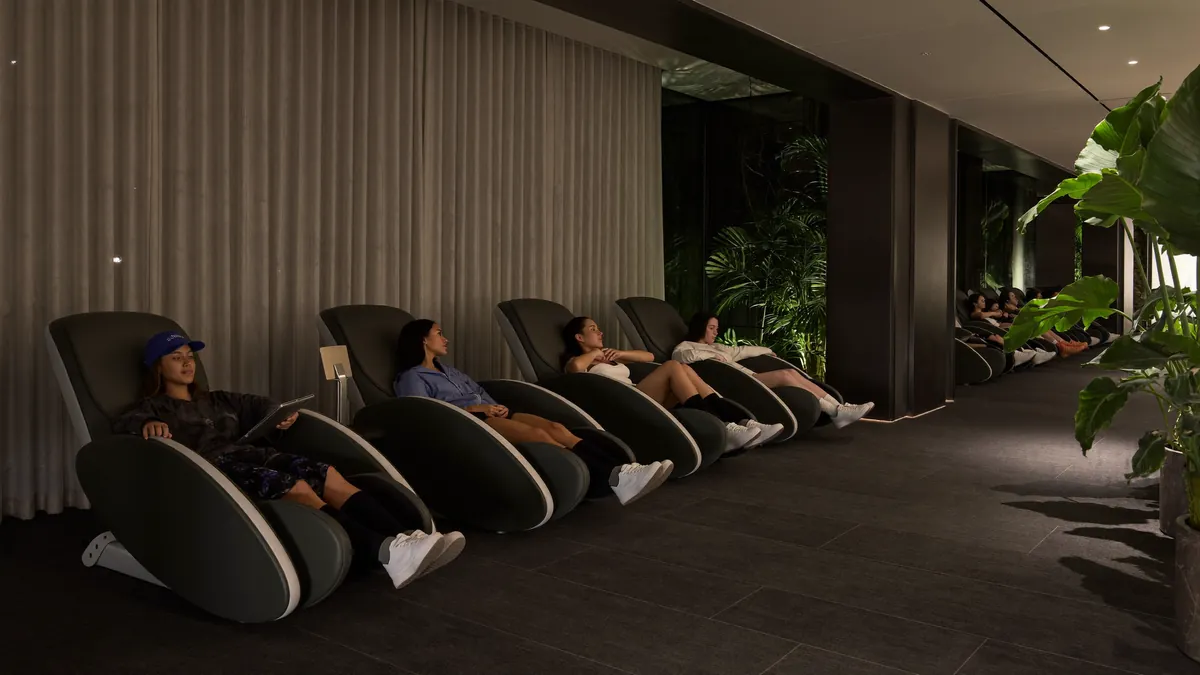
Why Hotels Are Adding Recovery Rooms — and What They Actually Earn
Gyms and pools no longer differentiate a property. Recovery rooms do. What goes inside, three budget tiers in USD and IDR, and the worked ROI for a 120-key resort.
Trends · 6 min read
Wellness Tourism in Bali: The 2026 Market in Numbers
Six million foreign arrivals, a 40% wellness spending premium and five distinct sub-markets from Ubud to Sanur. A supply-side breakdown of Bali's wellness tourism economy — with the service prices and equipment budgets that make it work.